Open Die vs Press Forging for High Strength Parts
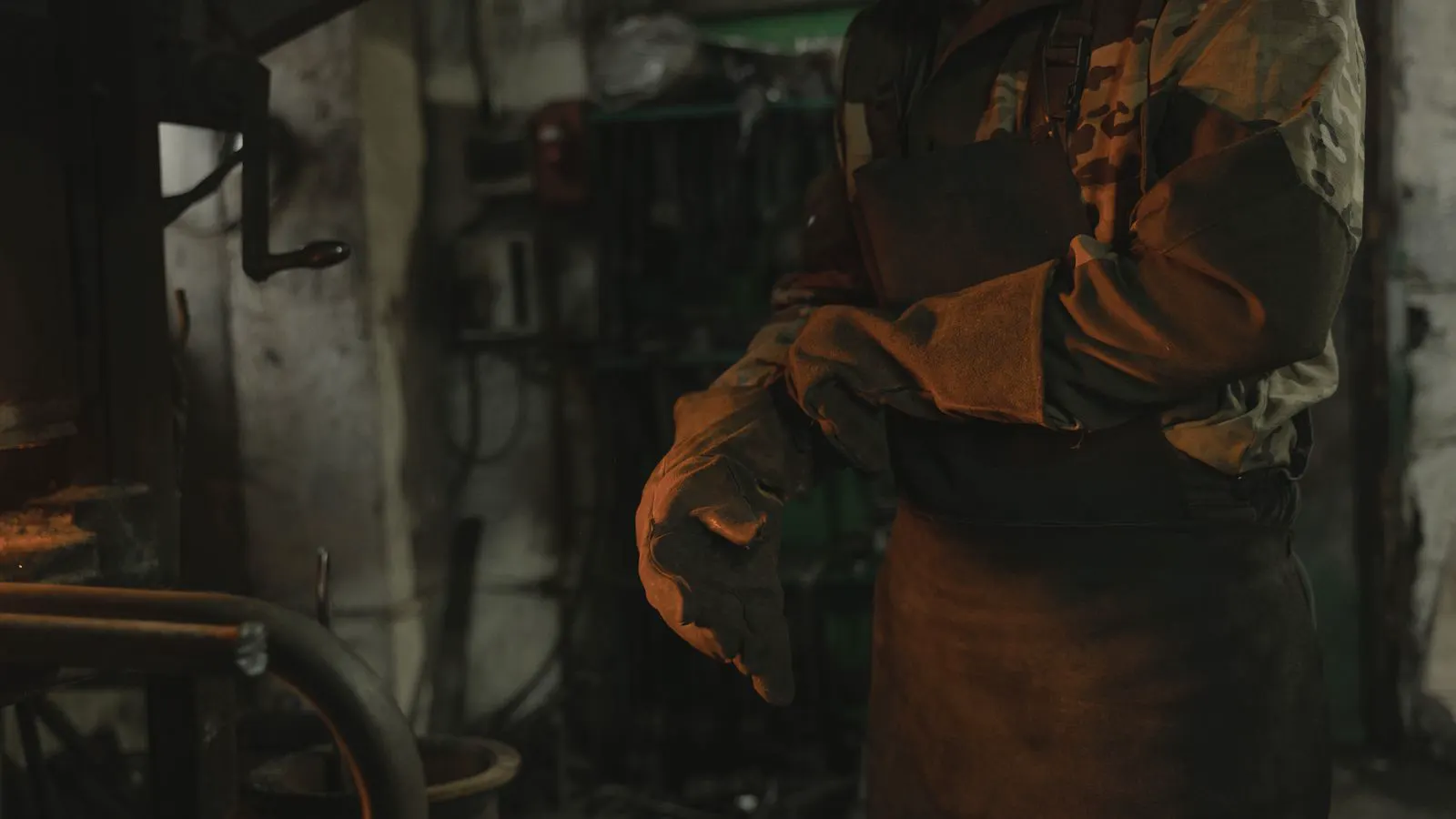
Open die forging suits heavy, high-strength components with loose tolerances, while press forging handles smaller, precise parts. The method choice depends on part mass, geometry, and production volume.
- Open die forging handles massive, high-strength parts but yields loose dimensions requiring heavy secondary machining.
- Press forging produces tighter tolerances and finer grain structures for smaller, complex high-strength components.
- Material selection and part mass are the primary drivers when selecting between these two forging methods.
High-strength parts demand forging methods that preserve material integrity while managing heat, force, and geometry. The choice between open die forging and press forging often comes down to part size, required tolerance, and production run length. Both methods shape metal through plastic deformation, but they differ significantly in how force is applied and how much control the operator has over the final shape.
How open die forging shapes high-strength metal
Open die forging uses a hammer, press, or other impact force to drive a heated billet between two open dies. The dies are not closed, so the metal can flow in multiple directions. This open configuration allows the operator to add, remove, or adjust metal during the strike. The result is a preform that captures the major features of the part but leaves significant material for finishing.
This method works well for massive components. A large gear blank, a turbine rotor, or a heavy structural bracket can start as a simple bar and be shaped through multiple open die strikes. The metal moves freely, which reduces stress concentration in thick sections. That matters for high-strength materials because trapped stress or uneven flow can create weak zones later.
The trade-off is dimensional control. Open die forging does not force metal into a closed cavity. The final preform may be larger than the finished part in several dimensions. Secondary machining removes the excess. For a 200 kilogram part, that machining cost is manageable. For a 20 kilogram part, it can erode the cost advantage of forging.
How press forging shapes high-strength metal
Press forging applies continuous pressure through a set of closed dies. The metal flows into a die cavity, and the closed geometry defines the shape. There are two common variants. Open die press forging uses a similar open die concept but applies force through a hydraulic press rather than a hammer. Closed die press forging uses a two-part die that closes around the billet, similar to an extrusion process.
Closed die press forging produces the tightest dimensions of the two methods. The metal is forced into a near-net shape, so less material is removed during machining. The closed die also promotes uniform flow, which can improve grain alignment in high-strength alloys. For smaller parts, this uniformity translates to better mechanical consistency across the production run.
The limitation is part size and geometry complexity. Press forging machines have a force limit. Large parts require presses with enormous tonnage, and the die cost scales with part size. Complex internal cavities can trap air or create filling defects. For high-strength parts with thin walls or deep pockets, the material must fill every corner of the die cavity under pressure. If the fluidity is not right, you get short shots or cold shuts.
Side-by-side comparison of both methods
| Option | Best for | Limitations |
|---|---|---|
| Open die forging with hammer | Massive parts, loose tolerances, variable geometry | High machining cost, less dimensional control, longer cycle time per strike |
| Open die press forging | Large parts, high volume, consistent preform shape | Requires high-tonnage press, still needs secondary machining, die wear affects surface finish |
| Closed die press forging | Small to medium parts, tight tolerances, high volume | Limited part size, complex cavities can cause filling defects, high initial die cost |
| Open die with multi-strike sequence | Mixed-size batches, custom or low-volume high-strength parts | Labor intensive, inconsistent preforms if not carefully managed, not ideal for high-speed production |
The table above summarizes the core trade-offs. In practice, the decision is rarely as clean as the table suggests. A part that is 150 millimeters in diameter and 40 kilograms may be better served by open die forging if it is a one-off. The same part in a run of five hundred units would almost always move to a closed die press die.
When to pick open die forging for high-strength parts
Open die forging is the right method when the part is large enough that machining cost is a fraction of the forging cost. Think of a 500 kilogram anchor block, a 300 kilogram drive shaft, or a 150 kilogram turbine casing. The initial forging operation creates a rough shape. The machining shop then finishes the critical surfaces. The material cost of the billet is high, but the forging operation itself is relatively low complexity.
Open die forging also suits parts where geometry changes during the production run. If a customer revises a bracket thickness or moves a bolt pattern, the open die operator can adjust the strike sequence without retooling a closed die. That flexibility is valuable during prototype development or when running mixed lots of similar but not identical parts.
Material choice also favors open die forging. Thick sections cool slowly, which can create coarse grain structures in some alloys. Open die forging allows the operator to perform hot working in stages, breaking down the grain structure gradually. That staged working is harder to achieve in a closed die because the metal is trapped in the cavity and cools unevenly.
When to pick press forging for high-strength parts
Press forging is the right method when the part is small enough to fit in a standard or heavy-duty press, and when the drawing calls for tight tolerances. A 500 gram valve body, a 5 kilogram bearing housing, or a 2 kilogram structural bracket can be forged in a closed die with near-net dimensions. The secondary machining is limited to deburring and final surface finish.
High-strength alloys like 4340 steel, 17-4PH, or 300M benefit from the uniform flow of closed die press forging. The metal is forced into a controlled path, which reduces the risk of internal voids and inclusions. For aerospace or automotive applications where every part must meet a minimum yield strength, that consistency is a major advantage.
Press forging also wins on production speed. A closed die cycle can complete in seconds. An open die hammer cycle may take longer per strike and requires multiple strikes to shape a single part. For a run of ten thousand small parts, the difference in cycle time compounds into a large cost gap.
The die cost is the main barrier. A closed die for a complex high-strength part can cost several times more than an open die set. That cost is amortized over the production run. For a low-volume order, the die cost may exceed the savings from reduced machining.
Material and heat treatment considerations
High-strength parts often require heat treatment after forging. The forging method influences what the heat treatment must accomplish. Open die forging leaves a rougher surface and a less uniform grain structure. The heat treatment must normalize the grain and then harden the part to specification. That process can introduce distortion, so the machining sequence must account for it.
Press forging produces a more uniform preform. The grain structure is finer and more consistent. Heat treatment distortion is typically lower because the part geometry is closer to the final shape. The thermal stress during quenching is more predictable. That predictability is valuable when the part has tight dimensional tolerances after heat treatment.
Alloy selection interacts with the forging method. Some alloys have limited workability at high temperatures. They require a specific forging temperature window that is easy to miss. Open die forging gives the operator more control over that window because the metal is not trapped. If the billet is too hot or too cold, the operator can adjust the next strike. A closed die press has less flexibility. If the metal is out of range, the strike may crack the part or fail to fill the cavity.
Cost and lead time realities
The cost comparison is not just material versus machining. It includes die cost, machine time, and quality rejection rates. Open die forging has lower die cost but higher machining cost. Press forging has higher die cost but lower machining cost. The crossover point depends on part size and production volume.
For a 100 kilogram part in a run of 50 units, open die forging is usually cheaper. The die cost is modest, and the machining cost is offset by the low die investment. For the same part in a run of 5,000 units, press forging wins because the die cost is amortized and the machining cost is lower per unit.
Lead time follows a similar pattern. Open die forging can start production quickly because the dies are simple. A custom open die can be made in days. A closed die requires more engineering, more machining, and more testing. The lead time for a closed die is longer, but the production run is shorter per unit.
Common mistakes in method selection
The most common mistake is choosing the method based on the forging shop’s available equipment rather than the part requirement. If a shop only has open die capability, it may push a small part through open die forging even though a press die would be better. The part will still work, but the cost and weight will be higher than necessary.
Another mistake is underestimating the secondary machining. An open die preform may look close to the final part, but the critical surfaces may still require 6 to 10 millimeters of material removal. That is not a small amount. It changes the material bill of lading and the heat treatment cycle.
A third mistake is ignoring die wear. Open die sets are simpler but wear differently than closed die sets. The open die surfaces take impact and abrasion. If the dies are not maintained, the preform shape drifts, and the machining cost rises. Closed die sets wear on the cavity surfaces. If the cavity erodes, the part dimensions shift in a way that is harder to detect until it is too late.
Which method should you use for your high-strength part
The answer depends on three factors. Part mass, tolerance, and run length. If the part is above 50 kilograms and the tolerance is loose, open die forging is usually the better fit. If the part is below 10 kilograms and the tolerance is tight, press forging is usually the better fit. The middle range is where the decision is harder and requires a real cost model.
Bring the drawing and material specification to your forging partner. Ask them to quote both methods. The quote will reveal the true cost difference, including die cost, machining, and lead time. Do not rely on a verbal estimate. A written comparison with the same assumptions for both methods is the only way to make an informed decision.
High-strength parts are not just about yield strength. They are about consistency, predictability, and cost control. The forging method sets the baseline for all of those. Choose the method that matches the part, not the shop’s habit.
Frequently asked questions
Can open die forging produce parts with tight tolerances?
Open die forging produces a preform with loose dimensions. Tight tolerances require secondary machining, which adds cost and complexity.
Is press forging only for small parts?
No, but closed die press forging is most practical for parts that fit within the press force and die size limits. Large parts can be press forged but require very high-tonnage equipment.
Which method gives better mechanical properties for high-strength alloys?
Both can achieve the same mechanical properties if the heat treatment is correct. Press forging produces a more uniform grain structure, which can improve consistency across a production run.
What is the main cost driver when choosing between these methods?
Die cost and secondary machining cost. Open die forging has lower die cost but higher machining cost. Press forging has higher die cost but lower machining cost.
Can I switch from open die to press forging mid-project?
Yes, but it requires new tooling and a revised machining sequence. The switch is most common during prototype phase when the final method is not yet locked.