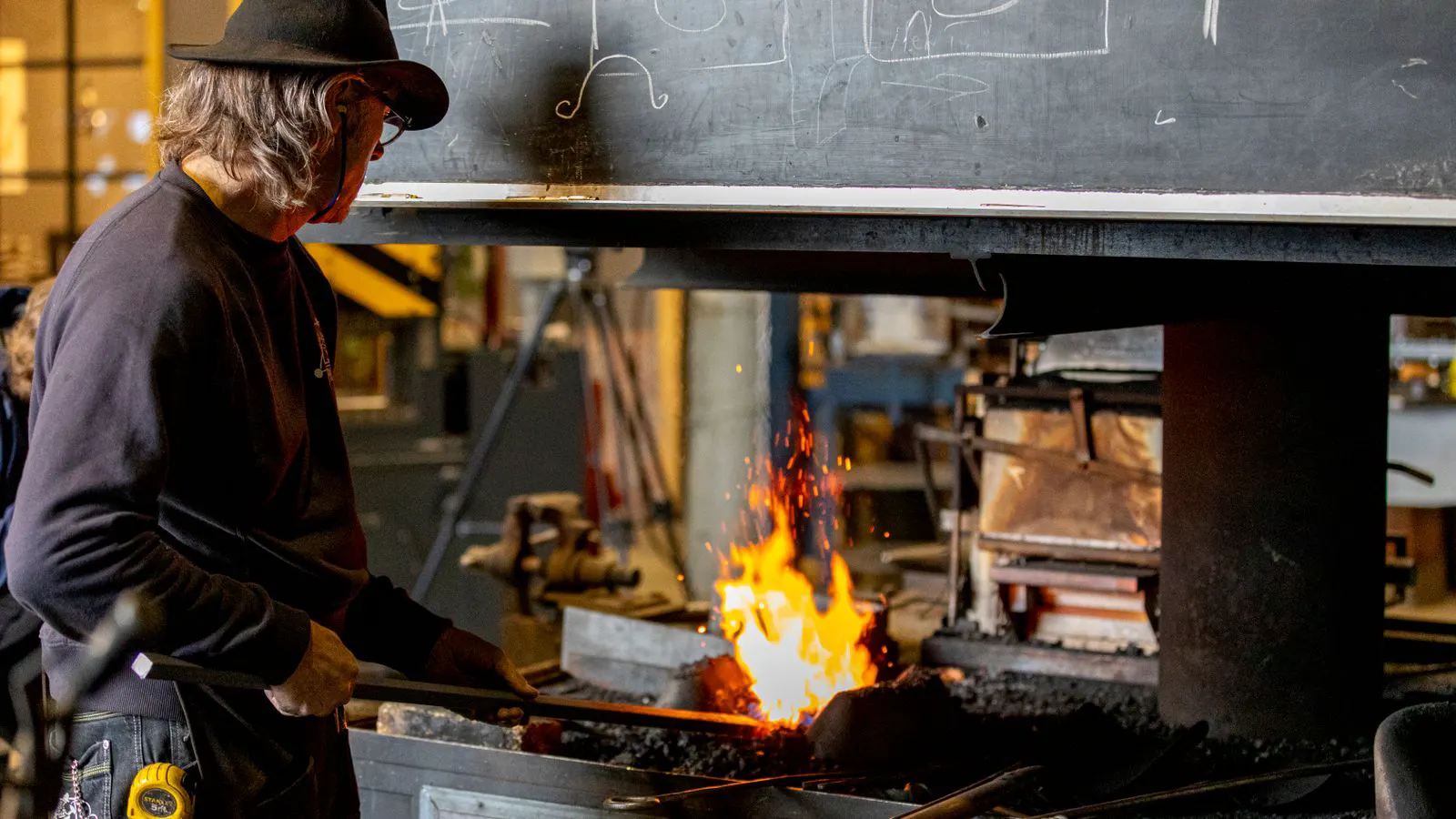
Comparison: Forged vs Cast Turbine Blades for Gas Engines
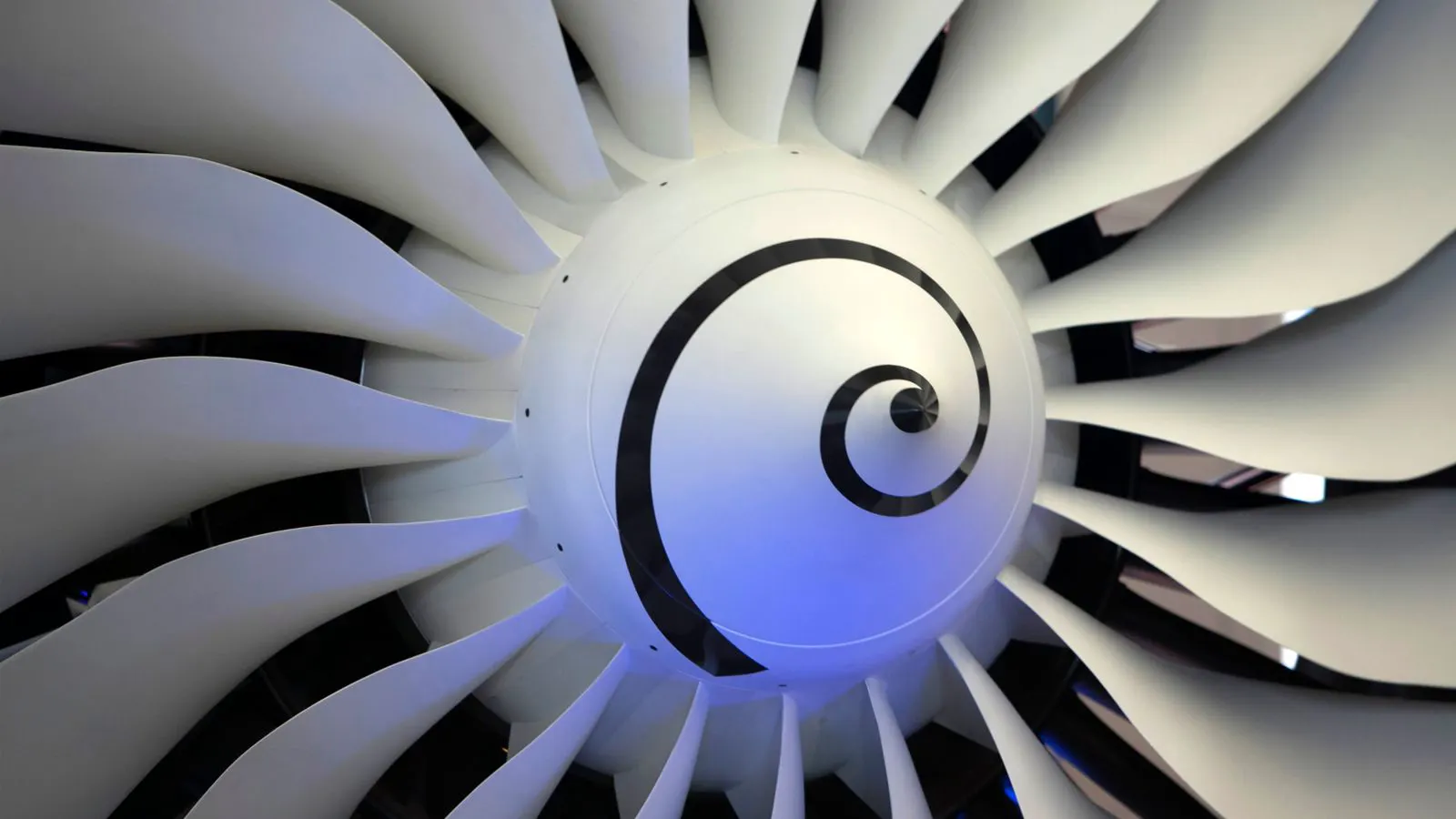
Forged turbine blades offer superior fatigue resistance and strength-to-weight ratios, ideal for high-stress, long-life applications. Cast blades provide better complex geometry control and lower unit costs for high-volume or moderate-load designs. The right choice depends on load profile, service temperature, and budget.
- Forged blades excel in fatigue life and strength-to-weight ratios for high-stress gas engine applications
- Cast blades offer superior complex geometry control and lower per-unit costs for high-volume production
- Material selection and heat treatment significantly impact the performance gap between the two methods
- The cost difference narrows at high volumes, while the performance gap widens at extreme service conditions
- Design intent, service profile, and total cost of ownership determine the optimal manufacturing approach
Why the Manufacturing Method Matters More Than the Material
Turbine blades operate under some of the most punishing conditions in any gas engine. They face cyclic thermal loads, high gas temperatures, centrifugal forces, and mechanical vibration that combine to drive fatigue failure. The method used to form the blade often determines how it performs over its service life, sometimes more than the alloy specification alone.
This is why engineers and procurement teams must evaluate the manufacturing process alongside material selection. A forged blade and a cast blade made from the same alloy can behave very differently in service. The difference stems from grain structure, internal defects, dimensional tolerances, and the ability to optimize geometry for the specific loading conditions.
The primary trade-off between forged and cast approaches centers on performance versus cost and design flexibility. Forging typically delivers better mechanical properties and longer fatigue life, especially in high-stress regions. Casting provides greater freedom for complex internal geometries, better control over intricate airfoil profiles, and often lower unit costs when production volumes are high.
Performance Differences in Fatigue and Strength
The most significant technical difference between forged and cast turbine blades lies in their response to cyclic loading. Forging compresses the metal, creating a finer, more uniform grain structure that aligns with the loading path. This grain flow pattern improves how the blade resists crack initiation and propagation.
Cast blades, by contrast, have a columnar grain structure that grows perpendicular to the cooling direction. This structure provides good strength but is more susceptible to crack initiation at grain boundaries, particularly in the leading edge and root regions that experience the highest stresses. Under repeated thermal cycling, the cast microstructure can degrade faster than the forged equivalent.
For gas engine applications where blades experience millions of load cycles, this difference translates into measurable life differences. Forged blades generally require fewer inspection intervals and can run longer between overhauls. This reduces downtime and maintenance costs over the engine’s operating life. The performance gap widens at higher stress levels and more severe thermal cycling.
Cost Structure and Production Economics
The cost comparison between forged and cast turbine blades is not straightforward. Forging typically commands a higher per-unit price due to the energy intensity of the process, the need for precision die sets, and the labor required for trimming and finishing. The initial tooling cost for forging dies can be substantial, particularly for complex airfoil shapes.
Casting, especially investment casting, offers lower per-unit costs at scale. The process requires fewer post-production operations, and the dies can accommodate more complex geometries without the same tooling complexity as forging. For high-volume production runs, the cost advantage of casting becomes more pronounced as fixed costs are spread across more units.
However, the total cost of ownership extends beyond the purchase price. Forged blades’ longer service life and reduced maintenance requirements can offset their higher initial cost in many applications. When calculating life-cycle cost, engineers must account for inspection frequency, overhaul intervals, and downtime costs associated with premature blade failure.
Design Flexibility and Geometric Capabilities
One area where casting holds a clear advantage is geometric complexity. Investment casting allows manufacturers to produce intricate internal cooling channels, complex airfoil profiles, and detailed root geometries with high fidelity. These features are critical for heat management in modern gas engine turbine blades.
Forging has significant limitations for complex internal geometries. While open-die forging can handle substantial three-dimensional shapes, it cannot replicate the fine internal channel networks that casting can produce without additional machining or secondary processes. This limitation drives engineers toward casting when thermal management requires complex internal architectures.
That said, modern forging technology has expanded its capabilities. Multi-anvil forging, hot isostatic pressing, and hybrid approaches allow manufacturers to produce more complex shapes than traditional forging. The choice increasingly depends on whether the required complexity can be achieved within the performance envelope of forging.
Material Selection and Heat Treatment Considerations
The alloy specification interacts directly with the manufacturing method. Forging responds well to many high-strength, high-temperature alloys, including nickel-based superalloys and advanced steel grades. The forging process allows for precise control over grain size and orientation, maximizing the potential of these materials.
Casting is also compatible with a broad range of alloys, but the resulting microstructure may require additional heat treatment to achieve optimal properties. The solution treatment, aging, and stress-relief cycles for cast parts often differ from those used for forged components. Engineers must specify heat treatment parameters carefully to unlock the full performance of the cast material.
For gas engine applications, material selection must account for service temperature, oxidation resistance, creep resistance, and fatigue strength. The interaction between alloy chemistry, manufacturing method, and heat treatment determines the final properties. Two blades made from the same alloy but produced by different methods will have different property profiles.
When Forged Blades Are the Right Choice
Forged turbine blades are the preferred approach for applications where fatigue life, strength-to-weight ratio, and long-term reliability are paramount. High-performance gas engines, marine gas turbines, and industrial power plants often specify forged blades for the main turbine stages where stresses are highest.
The decision typically favors forging when the blade experiences extreme cyclic loading, operates at high temperatures, or requires a long service interval between replacements. In these scenarios, the higher initial cost of a forged blade is justified by reduced maintenance frequency and extended component life.
When Cast Blades Are the Right Choice
Cast turbine blades are the better choice when geometric complexity drives design, when cost per unit is a primary constraint, or when production volumes are high enough to offset the lower performance margins. Modern gas engines with advanced cooling architectures often use cast blades in stages where thermal management complexity outweighs the need for maximum fatigue life.
The decision favors casting when the blade design requires intricate internal cooling channels, when the service conditions are moderate in terms of stress and temperature, or when the engine manufacturer needs to reduce procurement costs for high-volume production.
Comparative Summary
| Option | Best for | Limitations |
|---|---|---|
| Forged turbine blades | High-stress applications, long service life, maximum fatigue resistance | Higher cost, limited geometric complexity, specialized tooling |
| Cast turbine blades | Complex cooling geometries, high-volume production, moderate stress levels | Lower fatigue life, potential grain boundary issues, additional heat treatment |
| Hybrid approaches | Applications requiring both complex features and high performance | Increased process complexity, higher tooling and production costs |
| Forged with secondary casting | High-performance applications needing some internal complexity | Process integration challenges, potential for interface defects |
| Advanced casting with grain refinement | Cost-sensitive applications needing improved fatigue performance | Still limited compared to forging for extreme conditions |
The selection process requires a structured evaluation of the specific application requirements. Engineers should define the service profile, stress levels, thermal environment, and maintenance strategy before selecting a manufacturing method. The optimal choice balances performance needs with economic constraints and production capabilities.
Qualifying Suppliers and Specifying Requirements
When specifying turbine blades, the manufacturer’s experience with the specific application matters. A supplier with proven experience in gas engine turbine blades understands the critical failure modes and can provide relevant service data. Requesting samples for metallurgical examination and fatigue testing is standard practice.
The technical specification should clearly state the required performance characteristics, not just the manufacturing method. Specify the fatigue life requirement, stress levels, and thermal profile rather than simply requesting “forged” or “cast.” This approach allows the supplier to propose the most appropriate solution for the application.
Include requirements for non-destructive testing, dimensional tolerances, and surface finish. For forged blades, specify grain flow requirements and any additional inspection criteria beyond standard NDT. For cast blades, define the maximum allowable defect size and location. These specifications protect against quality variations between suppliers.
The procurement team should also consider the supplier’s production capacity, lead times, and quality management systems. For critical applications, it is prudent to qualify two or three suppliers to maintain supply chain resilience. The selection process should include site visits and review of production records to verify capability.
Frequently asked questions
Can forged and cast turbine blades be used interchangeably in gas engines?
Not typically. The performance characteristics differ significantly, and the design of the engine is usually optimized for one manufacturing method. Substituting one for the other requires extensive revalidation and may not meet the original performance specifications.
How much more expensive are forged turbine blades compared to cast ones?
The cost difference varies widely based on design complexity, alloy, production volume, and required performance. For high-performance applications, forged blades can be significantly more expensive per unit, but the total cost of ownership over the engine's life may be lower due to extended service intervals.
What is the main advantage of casting for turbine blades?
The primary advantage is geometric flexibility. Casting can produce complex internal cooling channels and intricate airfoil profiles that are difficult or impossible to achieve with forging. This allows engineers to optimize thermal management for specific engine designs.
Are there any applications where the performance difference between forged and cast blades is negligible?
Yes. In lower-stress applications with moderate thermal cycling, the performance difference between forged and cast blades may be small enough that cost becomes the deciding factor. This is common in some lower-tier turbine stages and industrial gas engines.
How does material selection affect the choice between forging and casting?
Some alloys perform better when forged due to their grain structure and response to forging. Others can be produced by either method with appropriate heat treatment. The material must be selected based on service requirements, and the manufacturing method should be chosen to maximize the material's potential for the specific application.