AISI 1045 vs 4140: Which Forging Steel Grade Fits Your Load
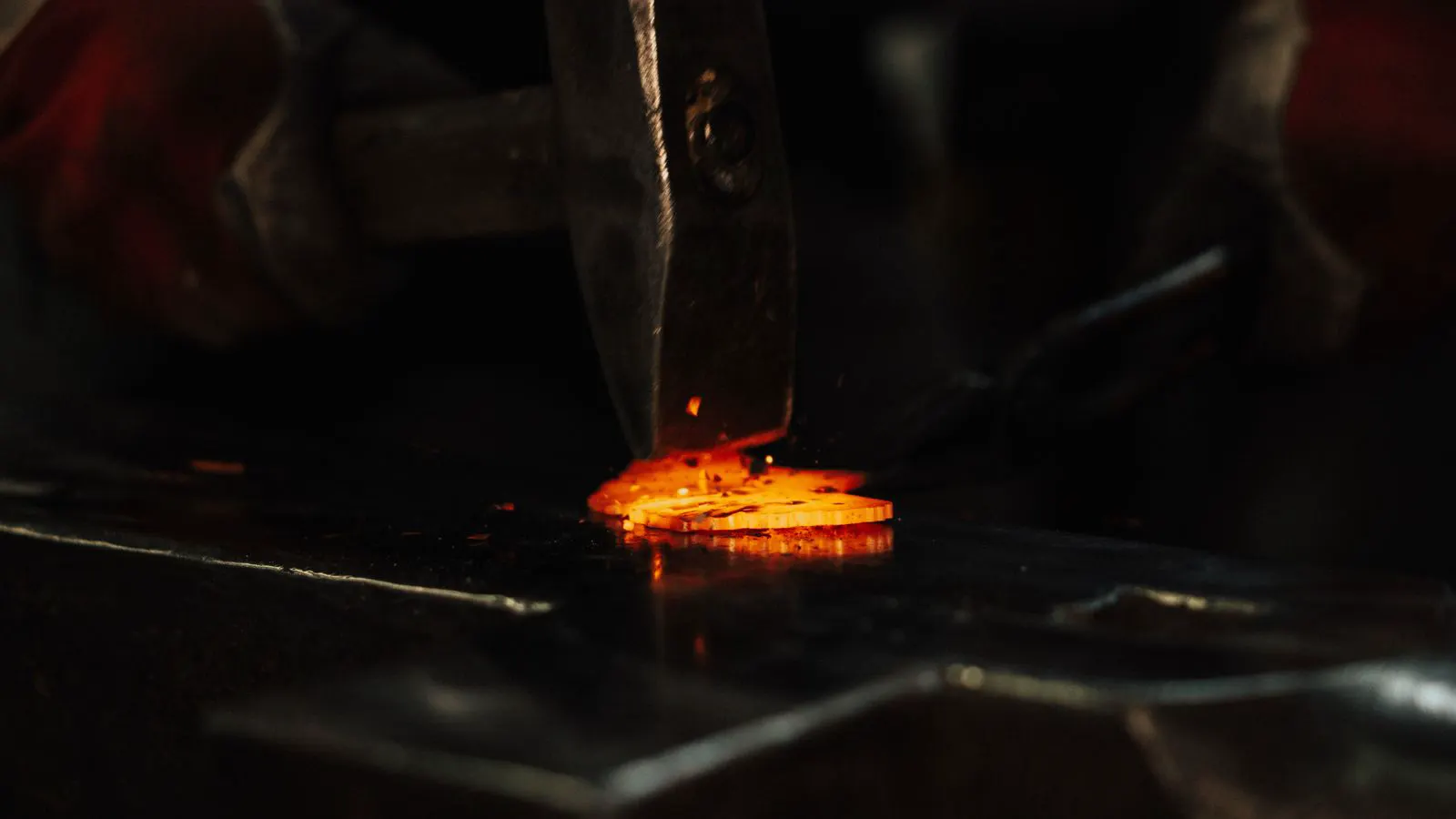
AISI 1045 offers a lower-cost, easier-to-machine option for moderate loads, while 4140 provides higher strength and fatigue resistance. Choose 1045 for general structural parts and 4140 for high-stress, long-life components.
- AISI 1045 is a medium-carbon steel with a lower alloy content and generally lower cost than 4140.
- 4140 is an alloy steel with chromium and molybdenum that allows for higher strength and better fatigue performance.
- Choose 1045 when budget, ease of machining, and moderate load requirements are the primary drivers.
- Choose 4140 when the application involves high stress, shock loads, or requires a longer service life.
How to Choose Between Common Forging Steel Grades
Selecting the right material for a forged component is one of the most critical decisions in the design and manufacturing process. The choice between different forging steel grades directly impacts the final product’s performance, safety, and total cost of ownership. In the steel and alloy grades landscape, two options stand out for their widespread use in load-bearing applications: AISI 1045 and AISI 4140.
While both are popular choices for forging, they serve different engineering needs. The decision is rarely about which steel is “better” in a vacuum, but rather which one fits the specific constraints of the application. This guide compares these two grades to help you determine the right material for your load requirements.
Key Properties of AISI 1045
AISI 1045 is a medium-carbon steel that serves as a workhorse for many industrial applications. It contains approximately 0.43 to 0.47 percent carbon and small amounts of manganese. Because it lacks significant alloying elements like chromium, molybdenum, or vanadium, its mechanical behavior is well understood and predictable.
The primary advantage of 1045 is its balance of strength and cost. It can be heat-treated to achieve a yield strength of around 100 ksi (690 MPa) or more, depending on the specific heat treatment. However, it is not designed to reach the ultimate strengths of high-alloy steels.
For forging, 1045 is generally easier to work with. It responds well to hot forging and cold working, making it suitable for a wide range of manufacturing processes. After forging, the part can be machined, drilled, or ground with relative ease. This machinability is a significant factor for manufacturers who need to produce complex geometries after the initial forging step.
Key Properties of AISI 4140
AISI 4140 is a chromium-molybdenum alloy steel that offers a step up in performance compared to plain carbon steels like 1045. It contains a similar carbon level (0.38 to 0.45 percent) but adds approximately 1.0 to 1.25 percent chromium and 0.20 to 0.30 percent molybdenum.
These alloying elements significantly improve the steel’s hardenability. Hardening ability is the capacity of the steel to develop a hard, strong surface while retaining a tough core. In 4140, the chromium and molybdenum allow for deeper penetration of hardness during quenching. This means thicker sections can be heat-treated without the risk of residual soft spots in the center.
The result is a steel with higher tensile strength and superior fatigue resistance. 4140 is often the go-to choice for components that experience cyclic loading, such as shafts, axles, and connecting rods. Its ability to maintain strength at elevated temperatures and its resistance to wear make it a preferred material in demanding industrial and automotive environments.
AISI 1045 vs 4140 Comparison Table
When comparing these two grades, it is helpful to look at their strengths and limitations side by side. The table below summarizes the key factors that influence the selection process.
| Option | Best for | Limitations |
|---|---|---|
| AISI 1045 | General structural parts, brackets, moderate load applications, budget-sensitive projects | Lower fatigue life, lower ultimate strength, limited hardenability for thick sections |
| AISI 4140 | High-stress shafts, axles, connecting rods, high-fatigue applications, heavy machinery | Higher material cost, more complex heat treatment requirements, harder to machine in the quenched condition |
| AISI 1045 | Easy machining after forging, simple geometries, moderate production volumes | Can suffer from cracking if quenching is not controlled, less suitable for shock loading |
| AISI 4140 | Long service life, high reliability, applications where failure is costly | Requires careful thermal management to avoid distortion, higher raw material price |
When to Pick AISI 1045
AISI 1045 is the optimal choice when your application involves moderate loads and the cost of the material is a primary constraint. If you are manufacturing brackets, frames, or general structural components that do not experience high-frequency shock or cyclic fatigue, 1045 will likely perform well.
The ease of machining 1045 is another strong argument for its use. If your forged part requires extensive post-forging machining, such as deep drilling or complex milling, the lower cost of tooling and labor associated with 1045 can offset the difference in material price. Furthermore, 1045 is widely available and well-supported by a vast network of suppliers and heat treaters.
However, you must be mindful of the part’s geometry. Because 1045 has limited hardenability, very thick sections may not respond uniformly to heat treatment. For thinner parts, or those that can be fully hardened, 1045 is a robust and economical solution.
When to Pick AISI 4140
AISI 4140 is the superior choice when your application demands higher strength, better fatigue resistance, or longer service life. If you are designing components for heavy machinery, automotive drivelines, or industrial equipment that operates continuously under load, 4140 is often the industry standard.
The alloying elements in 4140 allow for more precise control of the material’s properties. Engineers can tailor the heat treatment to achieve specific hardness levels and depth of hardness, which is critical for preventing fatigue cracks. In applications where a single failure could lead to a catastrophic shutdown or safety hazard, the higher reliability of 4140 justifies its higher cost.
Additionally, 4140 performs better in environments where the component may be subjected to wear or abrasion. Its higher hardness in the surface layer provides better resistance to surface degradation over time. If your application involves sliding surfaces or contact with other moving parts, 4140’s wear resistance is a significant advantage.
Cost Considerations and Total Cost of Ownership
When comparing forging steel grades, it is a mistake to look only at the raw material cost per pound. The total cost of ownership includes material, forging, heat treatment, machining, and the cost of failure.
While 4140 costs more per unit weight than 1045, it may last longer in service, reducing the frequency of replacement. In high-cycle applications, the extended lifespan of 4140 can make it the more cost-effective option over time. Conversely, if the application is static or low-cycle, the premium cost of 4140 may not be justified.
Heat treatment costs also differ. 4140 often requires more precise thermal cycles to achieve the desired properties without introducing defects. This can increase the heat treatment cost compared to 1045. Manufacturers should request quotes that include the full heat treatment process to get an accurate picture of the total cost.
Final Recommendations for Material Selection
To summarize the selection process, ask yourself three questions about your application:
- What is the maximum load and frequency of loading?
- What is the required service life and cost of failure?
- What are the post-forging machining requirements?
If the loads are moderate, the cost of failure is low, and machining is complex, lean toward AISI 1045. If the loads are high, the component is critical to safety or uptime, and the service life needs to be extended, AISI 4140 is the safer and often more efficient choice.
By understanding the distinct properties of these forging steel grades, you can make an informed decision that balances engineering performance with economic efficiency. Always consult with your forging partner and heat treaters to validate the material choice for your specific design.
Frequently asked questions
Can I substitute 1045 for 4140 in a high-stress application?
Generally, no. 1045 lacks the alloying elements needed for the high fatigue resistance and strength of 4140. Substitution could lead to premature failure.
Is 4140 harder to machine than 1045?
Yes, particularly after heat treatment. The higher hardness of 4140 requires specialized tooling and increases machining time and cost.
Which steel is better for large, thick forged parts?
4140 is often better for thick sections because its high hardenability ensures uniform properties throughout the part, whereas 1045 may have a softer core.
Can these steels be used in high-temperature applications?
Both can handle moderate temperatures, but 4140 generally retains its strength better at elevated temperatures due to its alloy composition.
How do I get a quote for these forging steel grades?
Contact a forging supplier with your part drawings and specify the material grade (1045 or 4140). They will provide a quote based on the volume and complexity of the part.


