Open-Die vs Semi-Closed Forging: Process Selection
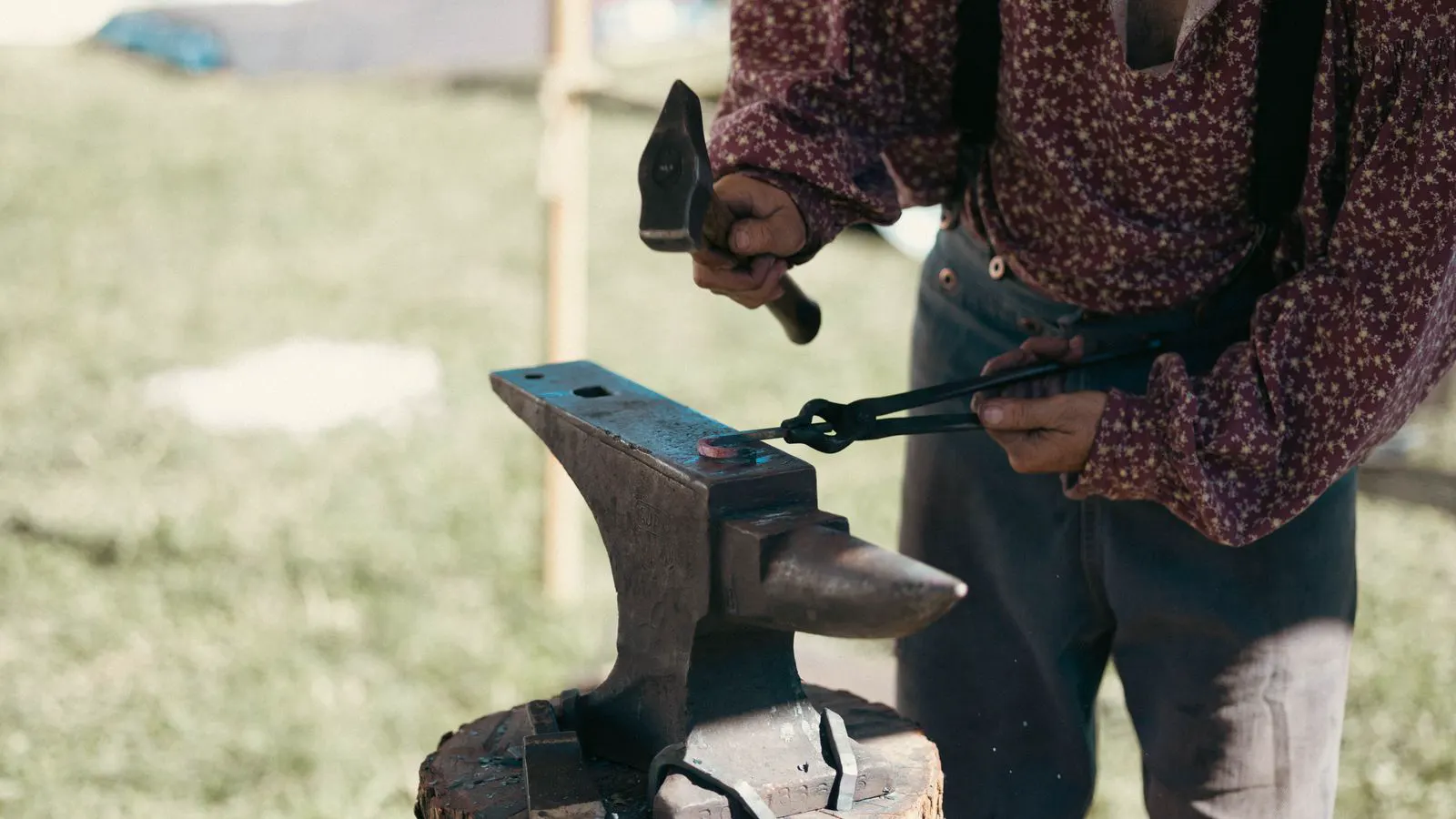
Open die forging shapes parts with a single anvil and hammer, while semi closed forging uses a bottom die plus a top die for tighter dimensions. Selecting the method depends on part geometry, required tolerances, material type, and production volume.
- Open die forging is a low cost, low setup method best for long, simple, or high volume shapes like shafts and bars.
- Semi closed forging provides tighter dimensional control than open die but still allows some flash and requires more complex dies than fully closed forging.
- The choice between the two methods depends on part geometry, tolerance requirements, material, and production volume.
- Open die is ideal for long parts, simple cross sections, and high throughput. Semi closed is better for parts with more defined features and moderate tolerances.
- A hybrid approach, using open die for pre-shaping and semi closed for finishing, can reduce scrap and cost.
What open die forging can and cannot do
Open die forging uses a single flat anvil and a hammer or press to shape hot metal by repeated blows or presses. The workpiece sits on the anvil, and the tool above it compresses the metal. The metal is free to expand sideways during the operation. This gives the process a lot of flexibility for simple, elongated, or bar-like parts.
It is a low setup cost method. You do not need a matched pair of dies. You need a flat or slightly shaped anvil, a top tool, and a hammer or press. For long shafts, bars, and simple hex or round sections, this is the most economical route. The process handles long parts well because the metal can move along the anvil as it is upset or drawn.
The limitation is dimensional control. Because the metal is free to spread sideways, the final shape depends heavily on the operator, the hammer strike pattern, and the anvil surface condition. Tolerances are looser than in closed die forging. If your part needs tight tolerances on a small cross section, open die is usually not the right fit.
What semi closed forging adds to the mix
Semi closed forging uses a bottom die and a top die. The bottom die is fixed, and the top die moves down to compress the hot workpiece. The workpiece is constrained more than in open die forging, but it is not fully enclosed. The metal can still flash out from the sides, which is why it is called semi closed.
This method gives better control over the final shape than open die. The bottom die defines the lower boundary of the part, and the top die compresses the metal to the desired height. You can get tighter tolerances on the cross section. For parts with a defined lower profile, such as a flange, a hub, or a stepped shaft, semi closed forging is a good fit.
The setup cost is higher than open die. You need a bottom die and a top die. You also need more care in die design to manage the flash and the material flow. If the die is not designed well, you can get excessive flash, die wear, or incomplete fill of the part.
Process selection for specific part types
The choice between open die and semi closed forging comes down to the part. The table below compares the two methods for common part types.
| Part type | Open die forging | Semi closed forging |
|---|---|---|
| Long shafts and bars | Excellent fit. Low cost, high throughput, easy setup. | Usable but overkill. More cost than needed for simple long parts. |
| Simple hex or round sections | Good fit. Fast production, low die complexity. | Better fit if tight tolerances are required. |
| Stepped shafts | Possible, but requires careful upset and drawing. Tolerances are loose. | Better fit. Bottom die defines the lower steps, top die compresses. |
| Flanges or hubs | Poor fit. Open die cannot define the flange geometry well. | Good fit. Bottom die defines the flange, top die closes the part. |
| Small, tight tolerance parts | Poor fit. Open die cannot hold tight tolerances. | Better fit, but fully closed die may be needed for very tight parts. |
For long shafts and bars, open die is the default. You can get a long, uniform section with a few upsets and draws. The cost is low, and the lead time is short. For stepped shafts, open die can work if the steps are simple and the tolerances are loose. If the steps are complex or the tolerances are tight, semi closed is a better fit.
Flanges and hubs are where semi closed really earns its place. The bottom die defines the flange profile, and the top die compresses the metal to the final height. You get a defined part with a flange that would be difficult or impossible to make with open die.
Material and tonnage considerations
The material you forge affects the choice of method. Open die forging is forgiving on material choice. It can handle carbon steel, low alloy steel, and some tool steels. The process is less sensitive to material flow because the metal is free to move.
Semi closed forging is more sensitive to material flow. The metal is constrained between two dies, so it has to flow into the die cavities in a controlled way. If the material does not flow well, you can get incomplete fill, excessive flash, or die damage. For high strength steels, semi closed forging may require higher tonnage. The dies need to be designed to handle the stress.
Tonnage is a practical constraint. If your forging plant has a 500 ton press, you can do semi closed forging on small to medium parts. If you need to forge a large shaft, you may need a higher tonnage press. Open die forging can be done on smaller presses because the metal is not fully constrained.
Production volume and cost trade-offs
Open die forging is the lowest cost method. The setup is simple, and the dies are cheap. For high volume production, this is a major advantage. You can run open die forging on a small press with a short setup time.
Semi closed forging has a higher setup cost. The dies are more complex, and they take longer to machine. But for medium to high volume production, the cost per part can be competitive if the part benefits from the tighter tolerances and better shape definition. For low volume production, semi closed may not be worth the die cost.
The production volume also affects the choice of tooling. Open die uses simple tools that are easy to replace. Semi closed uses matched dies that wear over time. You need to budget for die maintenance and replacement. If you are running a part for a short period, open die is more economical. If you are running a part for years, semi closed can be justified if the part needs better shape control.
When to pick each method
Pick open die forging when the part is long, simple, and high volume. Think shafts, bars, and simple hex or round sections. The tolerances are loose, and the cost needs to be low. Open die is the right tool.
Pick semi closed forging when the part has a defined lower profile. Think flanges, hubs, and stepped shafts with moderate tolerances. The part needs a shape that open die cannot provide, but it does not require the full constraint of closed die forging. Semi closed is the right tool.
If the part is small and needs tight tolerances, consider closed die forging instead. Semi closed can handle some tight tolerance parts, but closed die is better for very small, complex parts with tight tolerances.
If the part is long and needs a defined lower profile, consider a hybrid approach. Use open die to pre-shape the long part, then use semi closed to finish the lower profile. This reduces the tonnage requirement and can improve the final shape.
Common mistakes in process selection
The most common mistake is choosing semi closed forging for a part that open die could handle. The die cost is higher, and the setup time is longer. If the part is a simple long shaft, open die is the better choice.
Another mistake is choosing open die forging for a part that needs a defined flange or hub. Open die cannot define those features well. You end up with a part that needs machining to get the final shape. That adds cost and reduces the benefit of forging.
A third mistake is not accounting for material flow. Semi closed forging requires the metal to flow into the die cavities in a controlled way. If the die is not designed for the material, you can get incomplete fill or excessive flash. Always test the die with a small batch before committing to full production.
The fourth mistake is ignoring die maintenance. Semi closed dies wear over time. If you do not track die maintenance, the part quality will drift. You will get more scrap and more rework.
The final mistake is not testing the process. For any new part, run a trial batch. Check the part dimensions, the surface finish, and the flash. If the part does not meet the specification, adjust the die or the process before committing to full production.
Quick decision checklist
Use this checklist to guide your process selection:
- Is the part long and simple? If yes, start with open die.
- Does the part need a defined lower profile, such as a flange or hub? If yes, move to semi closed.
- Are the tolerances tight? If yes, semi closed or closed die is needed.
- Is the production volume high? If yes, open die is more cost effective for simple parts.
- Is the material hard to flow? If yes, semi closed may require higher tonnage and careful die design.
- Do you have a hybrid option? Use open die for pre-shaping and semi closed for finishing if the part is long with a defined lower profile.
The answer to process selection is not a single method. It is a match between the part, the material, and the production plan. Open die is the low cost, high volume method for simple parts. Semi closed is the middle ground that gives better shape control for parts with defined lower profiles. Choose the method that matches the part, not the method that sounds more advanced.
Frequently asked questions
Can open die forging make flanges?
No, open die forging cannot define flange geometry well. The metal is free to spread sideways, so it cannot hold a defined flange shape. Semi closed forging is the better choice for flanges.
What is the main advantage of semi closed forging over open die?
Semi closed forging gives better shape control and tighter tolerances because the metal is constrained between a bottom die and a top die. Open die forging has a free metal flow that limits dimensional accuracy.
Is semi closed forging more expensive than open die forging?
Yes, semi closed forging has a higher setup cost because it requires a bottom die and a top die. The dies are more complex and take longer to machine. For high volume simple parts, open die is more cost effective.
Can I use open die and semi closed in the same production run?
Yes, a hybrid approach is common. You can use open die to pre-shape a long part, then use semi closed to finish the lower profile. This reduces tonnage and improves the final shape.
What material is best for semi closed forging?
Carbon steel and low alloy steel are common choices. High strength steels can be used, but they require higher tonnage and careful die design to manage material flow.