Open Die vs Closed Die Forging: Choosing the Right Process
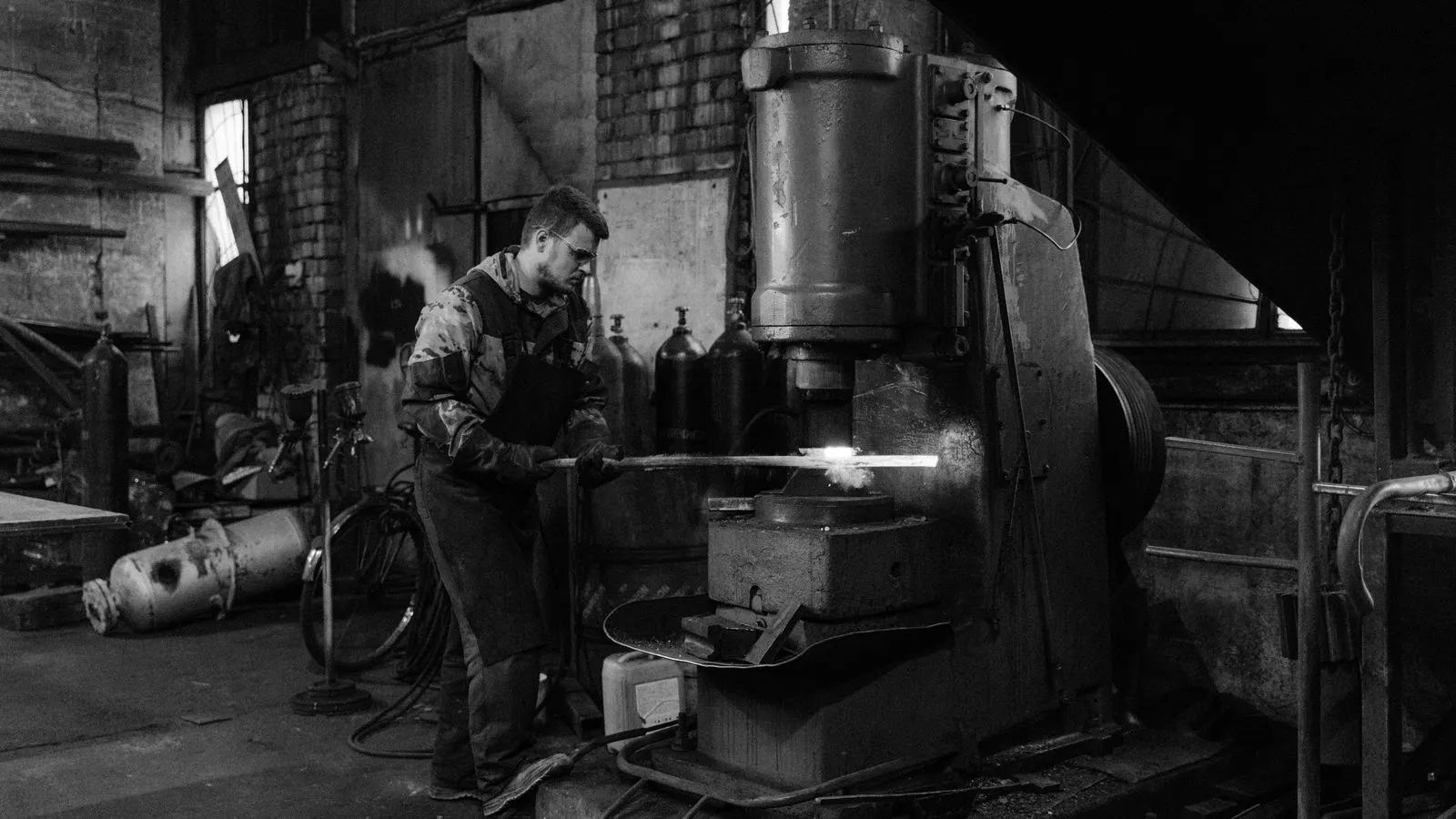
Open die vs closed die forging depends on part geometry and volume. Open die is ideal for low-cost, high-volume simple shapes, while closed die provides higher precision for complex, production-critical components.
- Open die forging is best for simple, low-volume, or prototype parts where cost efficiency outweighs dimensional precision.
- Closed die forging is the standard choice for high-volume production of complex parts requiring tight tolerances.
- The choice between the two processes depends heavily on part geometry, required tolerances, and expected production run length.
- Closed die processes typically require higher tooling costs but offer better material utilization and consistent part quality.
- Hybrid approaches and intermediate processes exist to balance the cost and precision trade-offs of the two main methods.
Which Forging Process Fits Your Part Geometry?
Selecting the right metal shaping method begins with understanding the final shape of your component. Forging processes are broadly categorized by how the metal is constrained during deformation. The primary distinction lies in whether the die set completely encloses the workpiece or leaves one or more sides open. This fundamental difference dictates the level of control, the complexity of the tooling, and the cost structure of the final part.
When evaluating open die vs closed die, engineers must look beyond simple cost per part. They must consider the interplay between the required precision, the production volume, and the material being used. The wrong choice can lead to excessive machining, scrap rates, or tooling costs that negate the benefits of the process.
How Do These Forging Methods Differ?
Open die forging uses a single die or a simple arrangement of dies that do not fully surround the metal. The metal is typically compressed between an upper die and an anvil. This process allows the metal to spread laterally, making it less suitable for parts with complex cross-sections or thin walls.
In contrast, closed die forging utilizes a pair of dies, often shaped like a female mold, that completely enclose the workpiece. The upper and lower dies are shaped to match the desired final geometry of the part, minus any draft angles. This enclosure forces the metal to flow into the die cavities, resulting in a part that closely resembles the die shape.
The table below summarizes the core operational and economic differences between these two primary approaches.
| Option | Best for | Limitations |
|---|---|---|
| Open Die Forging | Simple bar, rod, and flat bar production; low-cost prototypes; high-volume, low-complexity parts. | Limited geometric complexity; parts often require significant secondary machining; less control over final dimensions. |
| Closed Die Forging | High-volume production of complex parts; components requiring tight tolerances; critical safety applications. | High initial tooling cost; not economical for very low volumes or one-off parts; requires precise die design. |
| Semi-Open Die Forging | Parts that need some shape control but not full enclosure; intermediate complexity. | Tooling cost is higher than open die but lower than full closed die; geometric flexibility is still limited. |
When Should You Choose Open Die Forging?
Open die forging is the go-to process for manufacturers producing large quantities of basic shapes. If your application requires a simple bar, a round rod, or a flat section, open die is the most cost-effective method. The tooling for open dies is relatively simple, often requiring just one die block and an anvil. This simplicity translates to lower tooling costs and faster changeovers.
This process is also well-suited for prototype development or very short production runs where the investment in complex closed die tooling is not justified. For example, a company developing a new structural bracket might use open die forging to produce a small batch for testing. Once the design is finalized and the volume increases, they would likely switch to closed die forging for better precision and lower per-unit costs.
However, open die forging has a significant limitation: the metal is free to flow outward. This means that the final dimensions are less predictable. While the length and general shape can be controlled, the cross-sectional dimensions often require machining to meet final specifications. For high-volume production of complex parts, this secondary machining can eat into the cost advantages of the forging process itself.
When Should You Choose Closed Die Forging?
Closed die forging is the industry standard for high-volume production of complex components. When a part has intricate features, thin walls, or requires tight dimensional tolerances, closed die is the clear choice. Because the metal is enclosed, it is forced to fill the die cavity completely. This results in a part that is very close to the final shape, minimizing the need for secondary machining.
The material utilization in closed die forging is also superior. In open die forging, the metal can spread beyond the intended area, leading to excess material that must be machined away. In closed die, the die cavity is designed to match the part volume, ensuring that nearly all the material ends up in the final part. This efficiency reduces scrap and machining costs.
Despite these advantages, closed die forging comes with a higher barrier to entry. The tooling is more complex and expensive. The dies must be precisely machined and maintained. For low-volume production, the amortized cost of the tooling can make each part significantly more expensive than an open die equivalent. Therefore, closed die forging is most economical when the production volume is high enough to offset the initial tooling investment.
How Do Tooling Costs Affect the Decision?
Tooling is often the deciding factor in open die vs closed die selection. Open die tooling is simpler and cheaper. A basic open die might cost a fraction of a closed die set. However, closed die tooling, while expensive, offers a longer lifespan and better precision.
The “break-even” point between the two processes depends on the specific part and volume. For very simple parts, even a large volume might not justify the cost of closed dies if the resulting part could be produced with open die and minimal machining. Conversely, for a complex part, even a moderate volume might favor closed die because the machining required for an open die part could be more expensive than the tooling cost difference.
Engineers should calculate the total cost of ownership, including tooling, material, forging energy, secondary machining, and labor. A simple comparison of forging cost per part can be misleading if it ignores the cost of the subsequent machining operations.
What About Intermediate and Specialized Processes?
While open and closed die forging represent the two ends of the spectrum, there are intermediate options. Semi-open die forging, for instance, uses dies that cover some but not all of the part. This can be useful for parts that need some shape control but do not require full enclosure.
There are also specialized processes like up-and-down forging or horizontal die forging that offer unique advantages for specific geometries. However, for the vast majority of industrial applications, the choice remains between open and closed die. The decision should be based on a thorough analysis of the part’s geometry, the required tolerances, and the projected production volume.
Ultimately, the goal is to select the process that provides the best balance of part quality, production speed, and total cost. By carefully evaluating these factors, manufacturers can make an informed decision that maximizes their efficiency and profitability.
How to Make the Final Decision
The decision between open die vs closed die forging should be a structured process. Start by defining the part’s critical dimensions and tolerances. If the tolerances are loose and the geometry is simple, open die may be sufficient. If the tolerances are tight and the geometry is complex, closed die is likely necessary.
Next, estimate the production volume. Low volume favors open die due to lower tooling costs. High volume favors closed die due to better material utilization and lower machining costs. Finally, consider the material and the required production speed. Some materials and part shapes may perform better in one process than the other.
By following this structured approach, manufacturers can avoid the pitfalls of choosing a process based on intuition alone. A careful analysis of the part, the process, and the production requirements will lead to a robust and cost-effective solution.
Frequently asked questions
Can open die forging produce complex parts?
Open die forging is generally not suitable for highly complex parts with thin walls or intricate features. It is best reserved for simple shapes like bars, rods, and flat sections.
What is the main advantage of closed die forging?
The main advantage of closed die forging is the high level of precision and material utilization it provides, resulting in parts that are very close to the final shape with minimal machining required.
Is closed die forging more expensive than open die forging?
Yes, closed die forging typically has higher tooling costs. However, for high-volume production of complex parts, it can be more cost-effective overall due to reduced machining and scrap.
Can I switch from open die to closed die during a project?
Yes, it is common to start with open die forging for prototyping or low-volume production and then switch to closed die forging when the design is finalized and production volumes increase.
How do I know if my part requires closed die forging?
If your part has complex geometry, thin walls, or requires tight dimensional tolerances, closed die forging is likely the best choice. Simple parts with loose tolerances can often be produced with open die forging.