Explaining Metal Forging: Open-Die and Closed-Die Methods
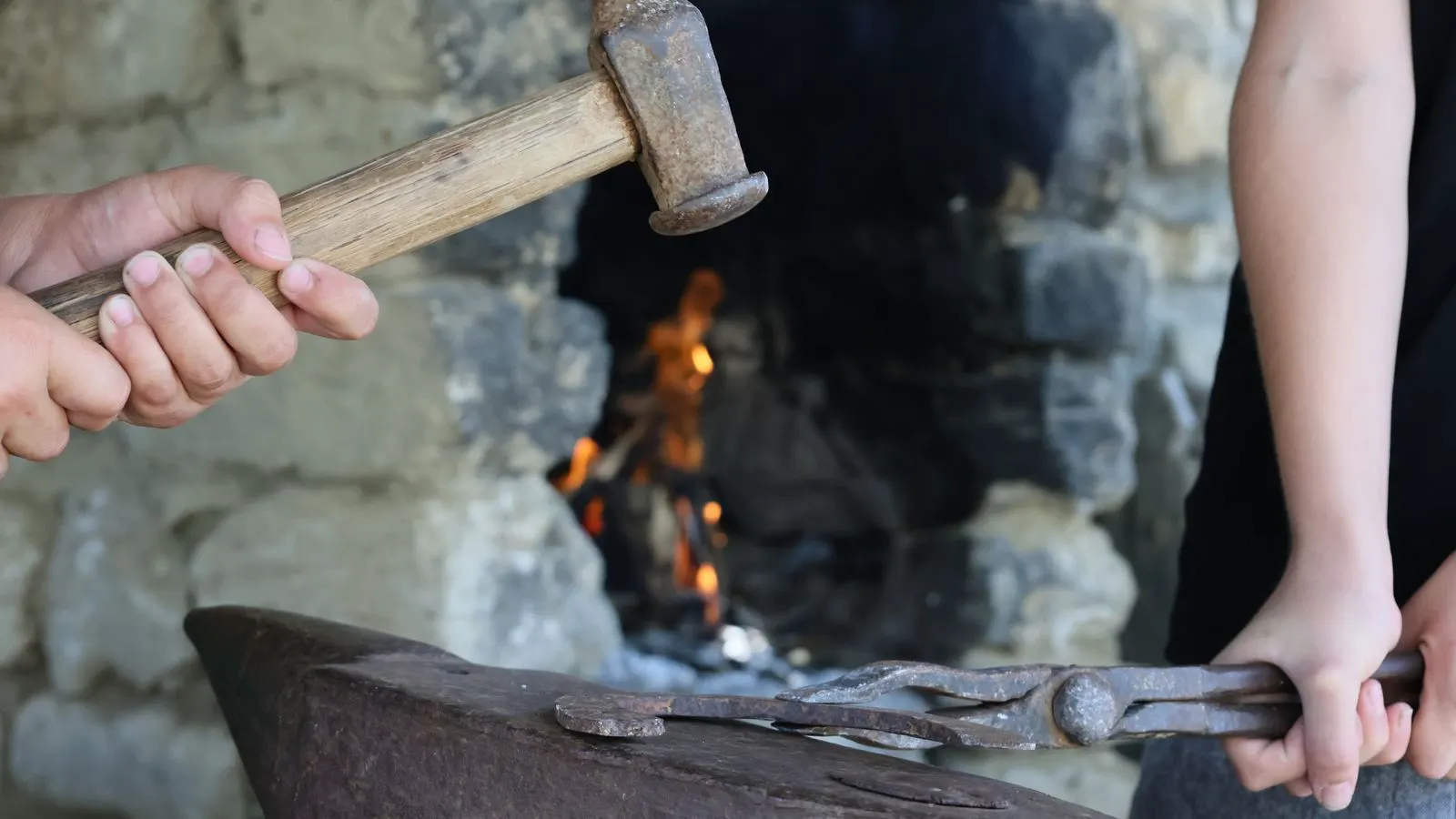
Metal forging shapes raw steel or other alloy stock into parts using compressive force. Open die forging uses a single die and an anvil, while closed die forging uses two dies. The method determines part accuracy, material flow, and production cost.
- Open die forging shapes a billet between a die and an anvil, leaving a flat or tapered surface.
- Closed die forging uses a pair of dies to enclose the workpiece, producing tighter dimensions.
- The choice between the two depends on part geometry, tolerance needs, and production volume.
- Engineers must specify die geometry and material behavior to avoid defects like cracking or incomplete filling.
- Both processes rely on compressive force, which improves grain structure and mechanical strength.
Metal forging shapes raw metal stock into a specific form by applying compressive force. Unlike casting, forging does not melt the material. It works the metal while it is heated to a working temperature. This process aligns the grain structure, which increases strength and fatigue life. Two main methods dominate industrial practice: open die forging and closed die forging.
What Is Metal Forging and Why Does It Matter
Metal forging is a forming process that uses mechanical pressure to change the shape of a solid piece of metal. The material is heated until it becomes plastic, then compressed between tools or dies. The metal flows around obstacles and fills the die cavity. This flow is controlled by the shape of the dies and the force applied by the hammer or press.
The result is a part with a continuous grain structure. This structure follows the shape of the final part. That alignment improves performance in high-stress applications. Engineers select forging when the part must withstand high loads, impact, or cyclic stress. For example, a crankshaft, a gear, or a structural bracket often benefits from the strength gains provided by forging.
The choice of forging method affects the final part in several ways. It changes the accuracy of the dimensions, the surface finish, and the amount of machining required. It also influences the cost per unit. Understanding how open and closed die forging work helps buyers and engineers specify the right process.
How Open Die Forging Works
Open die forging uses a single die and a flat anvil. The hot billet sits on the anvil. A die, shaped like the desired cross-section, is pressed onto the billet by a hammer or press. The metal flows outward between the die and the anvil.
This method works well for parts with one open face. A common example is a structural bar or a simple cross-section. The die controls the shape on one side, while the anvil provides the opposing pressure. The result is a part that is roughly formed, with one side defined by the die and the other side flat or slightly tapered.
Open die forging is often used for large structural components. The dies are simpler to build and maintain than closed die sets. The process is also more flexible. Operators can adjust the die position to change the shape of the resulting part. However, the accuracy is lower. The part usually requires significant machining to reach final dimensions.
The main advantage of open die forging is its simplicity. The tooling is less complex, and the setup time is shorter. For large parts where high precision is not required on every face, this method is efficient. The workpiece is not fully enclosed, so material flow is less constrained. This can reduce the risk of some defects, such as incomplete filling.
How Closed Die Forging Works
Closed die forging uses a pair of dies. The workpiece is placed between them. The dies enclose the metal and compress it as they close. The metal must flow into the cavity defined by the dies. If the volume of metal does not match the die cavity, defects can occur.
This method produces parts with tight dimensions on all surfaces. The dies shape the workpiece from multiple sides simultaneously. A gear, a bearing, or a complex bracket can be produced this way. The accuracy is higher than in open die forging, which reduces the amount of machining needed.
Closed die forging requires careful design. The die cavity must be slightly larger than the final part size to allow for material flow. This is called draft or taper. Without adequate draft, the metal cannot exit the die cleanly. The dies are also more expensive and complex to manufacture. They require precision grinding and maintenance.
The process is often used for high-volume production. Once the dies are made, each part is formed quickly. The consistency of the process is high, provided the material is properly heated and the dies are in good condition.
Key Differences Between Open and Closed Die Forging
The main difference is how the metal is enclosed. Open die forging uses one die and an anvil. Closed die forging uses two dies that close around the workpiece. This difference affects accuracy, tooling cost, and part geometry.
The table below summarizes the key factors.
| Factor | Open Die Forging | Closed Die Forging |
|---|---|---|
| Tooling | Single die and anvil | Pair of dies |
| Accuracy | Lower, more machining needed | Higher, less machining needed |
| Part Geometry | Simple, one open face | Complex, fully enclosed |
| Tooling Cost | Lower | Higher |
| Production Speed | Moderate | High for consistent parts |
| Material Flow | Less constrained | More constrained |
Open die forging is better for large, simple parts. Closed die forging is better for smaller, complex parts with tight tolerances. The choice depends on the specific requirements of the part.
How Forging Processes Affect Sourcing and Design Decisions
When sourcing forged parts, the method of production affects the cost and quality. Open die forging is often cheaper for large components. The tooling is simpler, and the process is more forgiving. However, the parts may require more post-processing.
Closed die forging is more expensive in terms of tooling. The dies cost more to make and maintain. But the parts come out closer to final dimensions. This reduces machining time and material waste. For high-volume production, the higher tooling cost is often offset by lower per-part costs.
Engineers must consider the material behavior. Some metals flow more easily than others. Aluminum and titanium require different temperatures and forces than steel. The die design must account for the specific material. If the die geometry is not correct, the part will not fill the cavity properly.
The final part must be inspected. Visual checks look for surface defects. Dimensional checks confirm that the part meets specifications. In some cases, internal inspection is needed to check for cracks or inclusions. The forging process affects the internal structure, so defects can be hidden.
A Worked Example: Forging a Structural Bracket
Consider a bracket used in a heavy machinery frame. The bracket is made from carbon steel. It has a flat base and two vertical arms. The dimensions are large, but the tolerances are moderate.
An open die forging approach would use a die shaped like the cross-section of the arms. The billet is placed on an anvil. The die presses down, and the metal flows outward. The result is a rough shape that matches the die profile. The base remains flat from the anvil. The part then goes to a machining center. The arms are trimmed, and the base is finished.
A closed die forging approach would use two dies. One die has the shape of the base, and the other has the shape of the arms. The billet is placed between them. The dies close, and the metal flows into the cavity. The part comes out with closer dimensions. The machining is limited to refining the surfaces and checking the fit.
In this case, open die forging might be chosen if the production volume is low and the part size is large. The tooling cost is lower, and the process is simpler. Closed die forging would be chosen if the volume is high and the tolerances are tight. The higher tooling cost is justified by the lower machining cost and higher consistency.
Common Mistakes and How to Avoid Them
The most common mistake in forging is poor die design. If the die cavity does not allow for proper material flow, the part will be defective. The metal may not fill the corners, or it may crack under pressure. Engineers must work closely with the forging provider to design the dies.
Another mistake is improper heating. If the metal is not hot enough, it will not flow easily. This can cause cracks or incomplete filling. If it is too hot, it may oxidize or soften too much. The temperature must be controlled carefully.
Maintenance is also critical. Dies wear over time. If the dies are not maintained, the dimensions will drift out of tolerance. Regular inspection and re-grinding of the dies are necessary to keep the process consistent.
Finally, the material must be selected correctly. The alloy must have the right ductility and strength for the intended application. The forging provider should be able to specify the heat treatment process that will be applied after forging.
Final Thoughts on Choosing a Forging Method
Open die forging and closed die forging are both effective methods for shaping metal. The choice depends on the part geometry, tolerance requirements, and production volume. Open die is simpler and better for large, simple parts. Closed die is more accurate and better for complex, high-volume parts.
Engineers and buyers should work with forging providers to understand the trade-offs. The goal is to select a process that delivers the right part at the right cost. The forging method is a fundamental decision that affects the entire production chain.
Frequently asked questions
What is the main difference between open die and closed die forging?
Open die forging uses a single die and an anvil, leaving one face of the part open. Closed die forging uses a pair of dies that enclose the workpiece completely.
Which forging method produces more accurate parts?
Closed die forging generally produces more accurate parts because the metal is shaped from multiple sides simultaneously.
Is open die forging used for small parts?
It can be, but it is more common for large or simple components. Closed die forging is often preferred for small, complex parts due to its precision.
Does forging require heating the metal?
Yes. The metal is heated to a working temperature to make it plastic and allow it to flow around the dies.
How does forging improve the strength of the part?
Forging aligns the grain structure of the metal with the shape of the part. This continuous grain structure improves strength and fatigue resistance.