Forging Lead Time: Factors That Delay Delivery
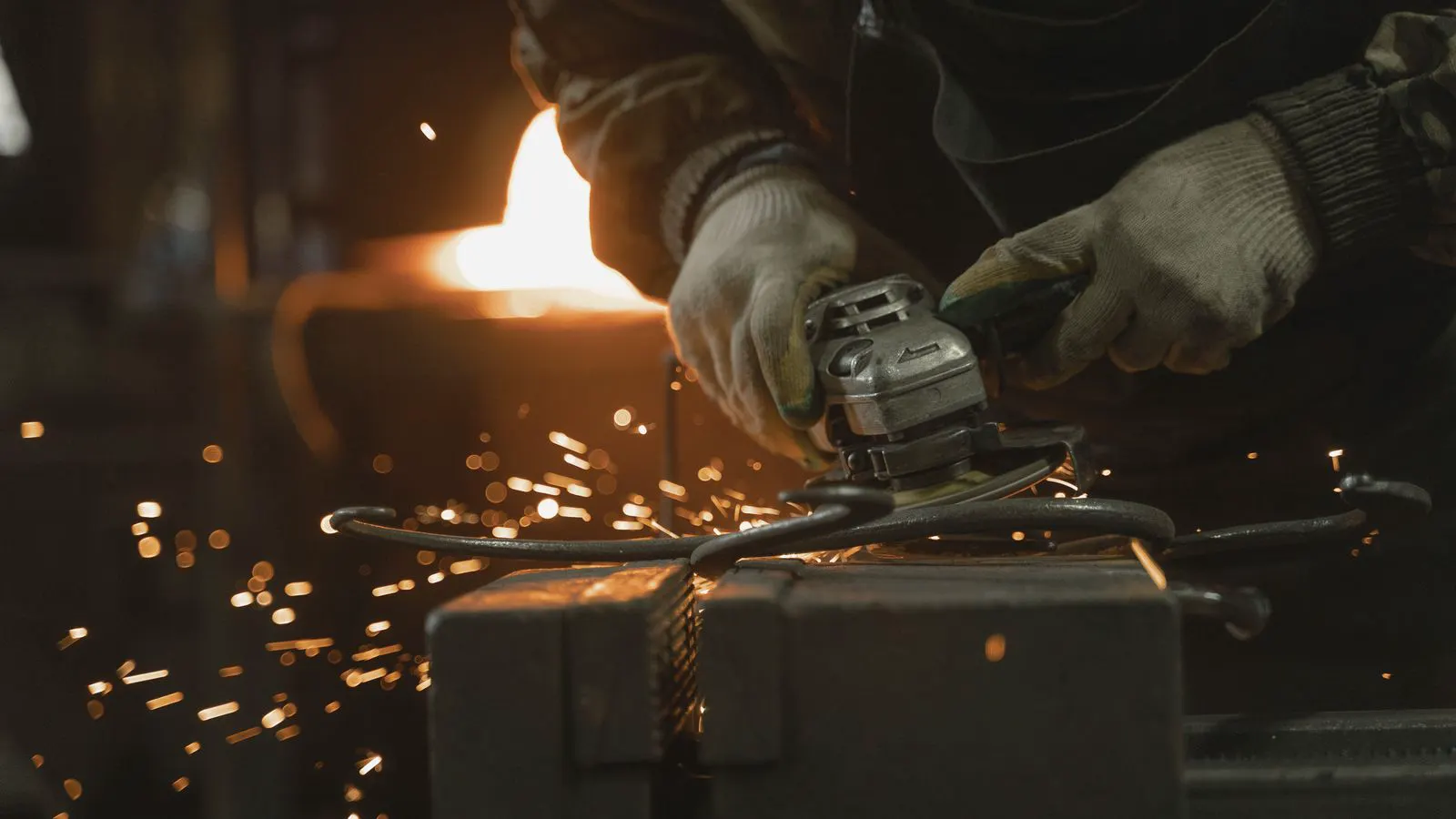
Forging lead time depends on die development, raw material availability, production capacity, and quality checks. Supply chain managers can shorten delivery schedules by standardizing specifications and securing raw material supply early.
- Identify whether delay comes from die work, raw material, or final processing.
- Standardize material grades and tolerances to reduce quote and production variance.
- Build buffer time for heat treatment and surface finishing into your delivery schedule.
- Request detailed production milestones from suppliers to track progress.
The clock on a forging order rarely starts when the part touches the die. It starts with the paperwork, the design freeze, and the material lot number. A supply chain manager who sees a six-week lead time instead of a four-week one is usually looking at the wrong place. The bottleneck is rarely the forging press itself. It is the lead-up work, the material sourcing, or the finishing steps that happen after the part leaves the cavity.
This guide breaks down where delays actually happen. It looks at how to read a supplier’s timeline, what to ask in an RFQ to avoid surprises, and how to compare quotes without getting stuck on sticker price.
Where the clock starts: die development
The most common source of early delay is the die. If you are ordering a new part, the die does not exist. You need to fund it, approve the design, and wait for the steel to be machined.
Die lead times vary by complexity and material. A simple open die for a structural component may take a few weeks to machine. A closed die with complex cavity work and high-speed steel inserts can take longer. If the supplier has a backlog of die orders, your part waits behind other projects. A die maker might have five open jobs. Your drawing is number six. The delay is not malice; it is queue management.
If you are reordering an existing part, the die is already made. This removes the largest early variable. However, if the die needs repair, re-sharpening, or a die change, that work adds time. Ask for the die condition status. If the die is at the end of its life, the supplier may need to order replacement inserts, which extends the delivery schedule.
A practical check is to ask when the die was last inspected. If the last inspection was six months ago and the part is a tight tolerance fit, the supplier might need to run a trial batch to verify dimensional stability before full production. This adds a week or two of test forging. It is a safety measure, but it consumes schedule.
For high-stakes projects, consider a “soft launch.” You can have the supplier produce a small sample run of ten to twenty parts while the main production die is being finished. This allows you to validate the part geometry and finish requirements early. If the sample fails, you fix the drawing now. If you wait until the first full shipment, the fix cost is much higher.
Material availability and quality checks
Raw material is the second major driver. Forging uses billet, bar, or wire. If the specific alloy grade is not in stock, the supplier must order it. This waiting period can stretch for weeks, especially for specialty alloys.
Even when material is in stock, it must pass inspection. Incoming mill certificates and dimensional checks are standard. If a shipment arrives with a certificate mismatch or a dimensional deviation, the material is held. That part sits in a quarantine area while the supplier negotiates a credit or replacement with the mill.
For high-value components, the material lot is often tied to the part serial number. This traceability adds paperwork and handling time. It is good for quality, but it slows the flow. If your part does not need full traceability, say so in the RFQ. It can help the supplier process the order faster.
Check the mill’s certification requirements. Some suppliers require a specific type of mill certificate, such as an EN 10204 3.1 or 3.2 certificate. If you do not specify the type in the RFQ, the supplier defaults to their standard. If your internal quality team rejects the standard certificate, you have to wait for the supplier to request the upgraded document from the mill. That is another week of delay. Specify the certificate type in the RFQ to avoid this loop.
Also, consider the shape of the material. If you need a specific bar diameter, the mill might have that diameter in stock. If you need a specialty alloy in a standard diameter that the mill does not make, the mill must forge the billet into the correct bar size. This secondary forging step adds time and cost. Ask the supplier if they can use a substitute bar diameter that is larger than your drawing requirement. They can machine it down to the correct size. This is often faster and cheaper than waiting for the exact diameter to be forged.
Production capacity and scheduling
The forging press itself is often not the bottleneck. The bottleneck is the schedule. A supplier may have the capacity to forge your part, but the production slots are full.
This happens when a supplier serves multiple industries. An aerospace contract may push out a commercial order. A machine shop may be running a large batch of automotive parts, leaving little room for small custom runs.
Ask about the production schedule. A good supplier will tell you when their next open slot is. If your part is a single item or a small lot, it may take longer to slot in than a large continuous run. Large lots use less die change time per unit, so they get priority. Small lots often wait for a “batch” slot.
A die change is not just swapping the steel. It involves cleaning the press, setting up the new die, checking the alignment, and running trial shots. This process can take half a day or a full day depending on the complexity of the die and the press setup. If a supplier is running a large production run, they do not want to stop for a small custom part. They will tell you to wait until the big run finishes.
If your part is critical, ask about the “slotting” policy. Some suppliers have a policy that they will interrupt a production run if the customer pays a premium or if the part is a safety item. If your part is not a safety item, they may not prioritize it. State your priority level in the RFQ. If you say “standard priority,” they will treat it as standard. If you say “critical path, due date is fixed,” they will look for a way to move it.
Also, check the supplier’s utilization rate. If the supplier is running at 95 percent capacity, they have no buffer. If they are running at 70 percent capacity, they can absorb a die change or a material delay without affecting your schedule. Ask for their current shop floor utilization. A supplier with high utilization is risky. A supplier with moderate utilization is safer.
Heat treatment and post-forging operations
Forging is often just the first step. After the part leaves the die, it may need heat treat. This changes the metal properties. It also adds time because the furnace cycles are fixed. You cannot rush a heat treat without risking distortion or hardness issues.
Surface finishing comes next. Grinding, machining, or coating adds more. Each step is a handoff. If the forging and finishing are done by the same supplier, the handoff is internal and fast. If they are separate companies, the part moves by truck or rail. Customs, documentation, and transit time all add to the delivery schedule.
This is where many supply chain managers underestimate the total time. A quote that says “forging complete in three weeks” may not include the six weeks for heat treat and machining. Get the full scope in writing.
Heat treatment is often the longest step. A furnace might run for eight hours per cycle, but the parts need to cool down, be inspected, and possibly re-treat if they fail the hardness test. If a batch fails the test, it goes back into the furnace. This rework adds time. Ask the supplier about their first pass yield for heat treatment. If their yield is 95 percent, you can expect a small number of re-treats. If their yield is 90 percent, you can expect more rework.
Surface finishing also adds time. If the part needs a specific surface finish, such as a mirror finish or a roughness below a certain value, the grinding process takes longer. A rough finish can be done in minutes. A fine finish can take an hour per part. If your drawing has a tight tolerance on surface finish, the machine shop will spend more time on it. This adds to the schedule.
Also, consider the coating. If the part needs a protective coating, such as a zinc plating or a black oxide, that is another step. The coating process might require a pre-treatment, the plating itself, and a post-treatment inspection. This can take a week. If the part does not need a coating, say so in the RFQ. It saves time and cost.
How to write a clearer RFQ
A vague request creates delay. It forces the supplier to guess what you need. They send a quote, you ask for changes, they quote again, and the clock ticks.
In your RFQ, include the part number, material grade, and heat treat spec. Include the quantity and the required delivery date. Include the acceptance criteria for dimensions and surface finish.
If you have a previous drawing, send the latest revision. If you do not, send a 3D model or a detailed sketch. The more specific the input, the fewer rounds of clarification. This reduces the time between RFQ and PO.
Also, state your priority level. If this is a critical path item, say so. Suppliers can prioritize critical items if they know they are critical. If you do not state it, they assume standard priority.
A good RFQ is a set of instructions. It tells the supplier exactly what to do. It removes the need for them to guess. If you say “material: 4140 steel,” the supplier knows what to order. If you say “steel,” the supplier has to ask you what type. That question is a delay.
Include the packaging requirements. If the part needs to be boxed individually, that takes time. If it can be palletized, that is faster. If the part needs to be wrapped in plastic to prevent rust, that is another step. State the packaging requirements in the RFQ. This helps the supplier plan the finishing and loading process.
Also, include the quality requirements. If you need a specific inspection report, such as a dimensional inspection report or a hardness report, state it in the RFQ. If you do not state it, the supplier will provide their standard report. If your standard report is not what you need, you have to ask for it later. That is a delay.
How to compare quotes fairly
When you get multiple quotes, do not just compare the unit price. Compare the total cost of delay.
A cheaper quote with a six-month lead time may cost you more in inventory carrying and project risk than a slightly higher quote with a three-month lead time.
Look at the payment terms. A supplier who wants 50 percent upfront may have less financial risk, but you have more cash tied up. A supplier who offers net 60 days may have more flexibility but may be less willing to prioritize your order.
Look at the penalty clauses. Some contracts include liquidated damages for late delivery. If the supplier agrees to a penalty, they are signaling confidence in their schedule. If they refuse, they may be signaling risk.
| Cost and Lead Time Driver | Typical Impact | How to Mitigate |
|---|---|---|
| Die development | Weeks to months | Standardize part families, reuse existing dies |
| Raw material stock | Days to weeks | Approve alternate grades, maintain stock |
| Production scheduling | Weeks | Confirm slot dates, accept batch quantities |
| Heat treatment | Days to weeks | Plan furnace time, avoid custom cycles |
| Logistics and customs | Days to weeks | Use local suppliers, pre-clear documentation |
When you compare quotes, look at the “total cost of ownership.” This includes the unit price, the lead time, the quality risk, and the service. A supplier with a low unit price but a long lead time and poor service might be more expensive in the long run. A supplier with a higher unit price but a short lead time and good service might be cheaper.
Also, look at the supplier’s financial health. A small supplier might have a low unit price, but they might not have the capacity to handle a large order. A large supplier might have a high unit price, but they have the capacity and the resources to handle a large order. If you need a large order, a large supplier is safer.
Managing the delivery schedule
Once the PO is signed, the delivery schedule is a living document. Do not assume the supplier will call you when things slip. You need to ask.
Set up a simple milestone check. Ask for confirmation when the die is ready. Ask for confirmation when material arrives. Ask for a photo or report when the part leaves the press.
If a delay happens, ask for the root cause. Is it a machine breakdown? A material shortage? A labor issue? Knowing the cause helps you predict if the recovery time will be short or long.
If the supplier cannot meet the revised date, negotiate a partial shipment. Get the first 50 percent of the parts early. That frees up your downstream production. It is better to have some parts than to wait for the full lot.
You can also split the order. Put 70 percent of the volume with your primary supplier and 30 percent with a backup. This reduces your risk if one supplier falls behind. It does not eliminate the risk, but it spreads it.
The goal is not to eliminate all delay. It is to make the delay visible and manageable. When you know where the time is going, you can plan around it.
Frequently asked questions
How long does die development take?
It depends on complexity and supplier backlog. Simple dies take a few weeks, while complex closed dies can take a month or more.
Can I reduce lead time by paying more?
Sometimes. Some suppliers offer premium pricing to move an order to the front of the production queue. Ask about this option during the quote stage.
What if my material is not in stock?
The supplier will need to order it from the mill. This can add weeks. You can mitigate this by approving alternate grades or keeping a small stock of critical material.
How do I track the delivery schedule?
Set up milestone check-ins with the supplier. Ask for confirmation at key stages like die completion, material receipt, and final inspection.
Should I use a local or offshore supplier?
Local suppliers reduce logistics time and communication friction. Offshore suppliers may offer lower unit cost but add transit time and customs risk. Weigh the trade-off based on your critical path.


