Forging Cost: Open-Die vs Closed-Die Press Selection
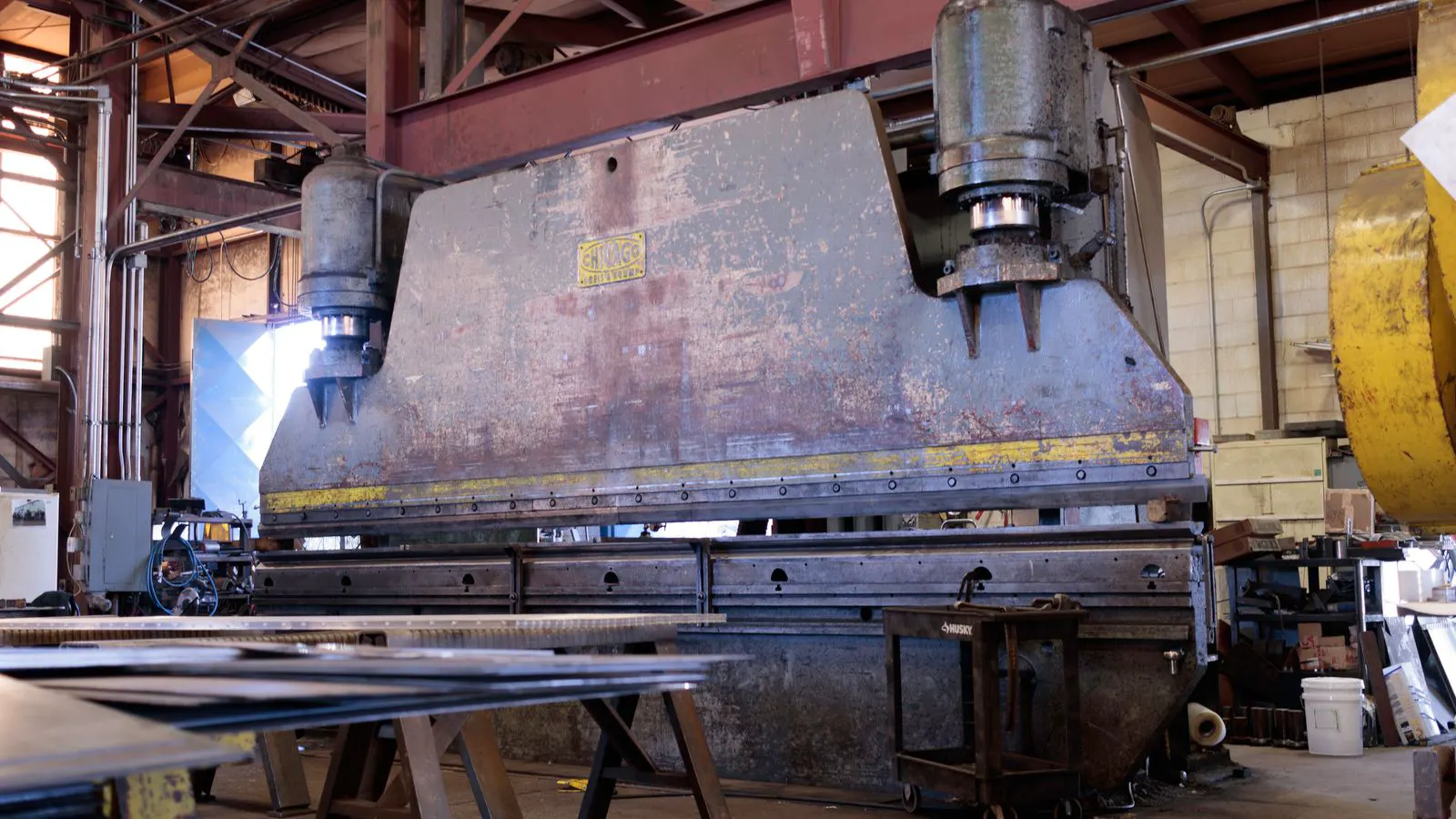
Open-die forging reduces die cost and works for large, simple parts, but closed-die presses yield tighter tolerances at higher upfront expense. Selection depends on volume, material, and dimensional requirements.
- Open-die forging uses cheaper, simpler dies and suits high-volume, low-tolerance parts.
- Closed-die presses provide tighter tolerances but require higher tooling and maintenance costs.
- Material choice and production volume significantly affect the total forging cost.
- Die life and maintenance frequency drive long-term cost differences between the two methods.
- Selecting the right process requires balancing part geometry, tolerance, and production scale.
How Open-Die Forging Cost Differs from Closed-Die Press Cost
Open-die forging shapes metal between two parallel or angled dies without enclosing the workpiece. Closed-die forging uses a pair of dies that close around the billet to define the final form. The cost structure changes based on die complexity, material behavior, and production volume.
Open-die dies are simpler to manufacture and cheaper to maintain. A single hammer or press strike may be enough for basic shapes. Closed-die dies require more precise machining and often multiple cavities. The die cost is higher, but the finished part has fewer secondary machining steps.
In a typical shop floor scenario, an open-die setup might consist of a massive vertical hammer and a simple anvil and upper die. The operator places a heated billet, strikes it, and the metal spreads outward. The cost to produce that die set is relatively low because the surfaces are flat and the tolerances are generous. A closed-die setup requires a press with a die holder that clamps a lower die and an upper die. These dies must mate perfectly to prevent metal from escaping before the shape is fully formed. The machining time for these cavities is significantly higher, driving up the initial investment.
What Drives the Initial Cost of Each Process
The first major cost factor is die fabrication. Open-die dies involve fewer mating surfaces and less precision. They can be made from standard tool steel with moderate heat treatment. Closed-die dies need tighter tolerances and often require specialized grinding or electrical discharge machining. The die cost for a closed-die set can be several times higher than an open-die set.
Consider a simple axle part. An open-die version might be formed by upsetting a round bar into a slightly wider cylinder. The dies are essentially flat plates. A closed-die version of a more complex shaft, with threaded ends and a reduced center, requires a cavity that matches the final profile exactly. The tool room must machine these curves accurately. If the part is made from alloy steel, the die material must withstand higher stress, adding to the cost of the steel bar stock itself.
The second factor is the forming equipment. Open-die forging often uses vertical hammers or horizontal presses with simpler frames. Closed-die presses may require higher tonnage to close the dies completely around the workpiece. Higher tonnage equipment costs more to purchase and maintain.
A horizontal press used for open-die forging of a large structural beam might have a tonnage rating sufficient to flatten the steel. A closed-die press for a small automotive bracket might need much less tonnage but requires a more expensive die set. Conversely, forging a large turbine blade or a heavy-duty gear blank in a closed-die press requires a massive hydraulic press. The capital cost of that press is substantial. The buyer must weigh the high capital cost against the savings in machining later.
The third factor is material loss. Open-die forging leaves flash trim that must be cut off. Closed-die forging also creates flash, but the geometry is more controlled. In both cases, material waste increases cost. However, closed-die parts often require less machining, which offsets some of the material loss.
In open-die forging, the excess material is thrown outward as a thin sheet of flash. This flash must be cut away with a trimmer. For a large part, this trimming operation is labor-intensive and time-consuming. In closed-die forging, the flash is squeezed into a small area where the dies meet. It is easier to remove, often with a simple cut. The amount of material lost in both processes depends on the preform size and the final part volume, but the cost of handling the waste differs.
How Production Volume Changes the Total Cost
At low volumes, open-die forging can be more economical. The die cost is a smaller share of total production cost. When volume increases, the cost per part drops for both processes. Closed-die forging benefits more from high volume because the tighter tolerances reduce machining time and inspection effort.
Imagine a prototype run of ten parts. If you use closed-die forging, you must pay for the expensive dies. That cost is spread over ten parts, making each part very expensive. If you use open-die forging, the dies are cheap, so the cost per part is lower. However, if the order is for ten thousand parts, the die cost becomes a negligible fraction of the total. At this volume, the savings from reduced machining and higher consistency in closed-die forging can outweigh the initial die cost.
A typical scenario involves a large structural component. Open-die forging may be the first choice if the part has simple geometry and loose tolerances. A closed-die press may be selected when the part has complex features that would require heavy machining after open-die forging.
For example, consider a flange for a pump. If the flange has a simple circular face and holes that are drilled later, open-die forging is often sufficient. The part is heated, upended, and shaped. The holes are drilled in a separate operation. If the flange has a complex internal thread or a non-circular profile, closed-die forging might be preferred. The die forms the profile, reducing the need for expensive milling operations.
| Option | Best for | Limitations |
|---|---|---|
| Open-Die Forging | Large, simple parts; low to medium volume; cost-sensitive projects | Loose tolerances; more material waste; rougher surface finish |
| Closed-Die Press Forging | Complex parts; tight tolerances; high volume production | Higher die cost; higher equipment cost; longer setup time |
| Semi-Closed Forging | Intermediate complexity; moderate tolerance needs | More die complexity than open-die; lower precision than closed-die |
Semi-closed forging uses one open die and one closed die. It offers a middle ground in cost and precision. It is not always available in every shop, so it requires careful evaluation of the part design. This process is useful when one side of the part needs to be shaped accurately, but the other side is free to expand. For instance, forming a cup shape might use a closed lower die and an open upper die. This reduces the die cost compared to a fully closed set but provides better control than a fully open-die process.
How Die Life and Maintenance Affect Long-Term Cost
Open-die dies experience less stress than closed-die dies. The workpiece is not fully enclosed, so the die faces are not subjected to the same closing pressure. This means open-die dies often last longer between repairs. Maintenance costs are lower, and downtime is reduced.
Closed-die dies face higher stress. The dies must close completely to form the part. This creates higher contact pressures and faster wear. Die life depends on the material being forged and the number of strikes. Hot forging in steel or titanium may require more frequent die maintenance than forging softer alloys.
The cost of die maintenance includes grinding, re-hardening, or replacing the die. For high-volume production, this cost adds up quickly. A closed-die die may need more frequent attention than an open-die die, even if the initial die cost is higher.
In open-die forging, the die faces are usually flat or slightly curved. Wear is often uniform. If a die becomes worn, it can be ground flat and re-hardened. This is a straightforward process. In closed-die forging, the cavities are complex. If a cavity wears out of shape, the entire die may need to be re-machined or replaced. The tooling cost for re-machining a complex cavity is high.
Consider a production line running 24 hours a day. A closed-die die might need to be pulled for inspection every few thousand strikes. This downtime affects the production schedule. An open-die die might last for millions of strikes before needing any work. The maintenance cost per part for open-die forging is often significantly lower over a long production run.
How Tolerance and Part Geometry Influence the Decision
Tolerance is the biggest factor in selecting between open-die and closed-die forging. Open-die forging produces parts with looser dimensional tolerances. The metal flows freely between the dies, and the final shape is less controlled. Closed-die forging produces parts with tighter tolerances because the die cavity defines the shape.
Part geometry also matters. Parts with complex internal features, thin walls, or multiple cavities are better suited for closed-die forging. Open-die forging works best for parts with simple, symmetrical shapes. If a part requires extensive machining to achieve the final dimensions, the closed-die process may be more cost-effective despite the higher die cost.
Material choice also affects the decision. Some materials are harder to forge and require higher temperatures or pressures. Closed-die presses may be necessary to achieve the required forming force. Open-die forging may not be able to achieve the same level of density and structural integrity for difficult materials.
For instance, forging a small pinion gear blank. Open-die forging can produce a rough blank. However, the gears require precise tooth profiles. If the blank is produced by open-die forging, the machining center must cut out the teeth and bore the shaft. This is expensive. If the blank is produced by closed-die forging, the die might form the bore and the general profile. The machining time is reduced, saving money on the final part.
How to Estimate the Total Cost for Each Process
When estimating forging cost factors, start with the die cost. Get quotes for both open-die and closed-die dies. The difference in die cost is the baseline for the decision.
Next, estimate the production cost per part. This includes material, labor, energy, and overhead. Open-die forging may have a lower cost per part for simple shapes. Closed-die forging may have a higher cost per part but lower total cost due to reduced machining.
Finally, consider the quality cost. Open-die parts may require more inspection and rework. Closed-die parts may have fewer defects, but the die cost is higher. The total cost of ownership includes all of these factors.
- Identify the part geometry and tolerance requirements.
- Get die cost estimates for both open-die and closed-die options.
- Estimate the production cost per part for each process.
- Calculate the cost of machining and inspection for each process.
- Compare the total cost of ownership over the expected production life.
To get accurate quotes, provide the forging supplier with a detailed drawing. Include the material specification, the heat treatment requirements, and the expected annual volume. Ask for a breakdown of die cost, setup cost, and cost per part. Compare the quotes from multiple suppliers if possible. The supplier with the lowest initial die cost may have higher labor costs or slower cycle times. The total cost is what matters.
When to Choose Open-Die Forging
Open-die forging is the best choice when the part has simple geometry and loose tolerances. It is also a good choice for large parts that are difficult to machine. The lower die cost and simpler equipment make it a cost-effective option for low to medium volume production.
Open-die forging is often used for structural components, such as large beams and plates. It is also used for parts that will be machined extensively after forging. In these cases, the rough shape from open-die forging is acceptable because the final dimensions are achieved in the machining shop.
For example, forging a large anchor bolt. The part is a simple cylinder with a threaded end. The thread is cut on a lathe. The diameter is controlled by the forging and the machining. Open-die forging is ideal here. The die cost is low, and the process is fast. If the part had complex shoulders or multiple holes, closed-die forging might be considered, but for a simple bolt, open-die is the standard choice.
When to Choose Closed-Die Press Forging
Closed-die press forging is the best choice when the part has complex geometry and tight tolerances. It is also a good choice for high volume production where the cost per part needs to be minimized. The higher die cost is offset by the lower machining cost and higher precision.
Closed-die forging is often used for automotive parts, such as crankshafts and camshafts. It is also used for aerospace parts that require high strength and precise dimensions. In these cases, the quality of the forged part is critical, and the closed-die process provides the necessary control.
Consider a fuel pump housing. It has complex internal passages and thin walls. Open-die forging would produce a rough shape that requires extensive drilling and milling to create the passages. This is slow and expensive. Closed-die forging can form the basic shape of the housing. The machining time is reduced, and the part is more consistent. For a high-volume production run, the closed-die process is often more economical.
Final Selection Criteria
The decision between open-die and closed-die forging depends on the part design, production volume, and quality requirements. Open-die forging offers lower initial costs and simpler dies. Closed-die forging offers tighter tolerances and less machining.
Engineers and buyers should evaluate the total cost of ownership, not just the die cost. The production cost, maintenance cost, and quality cost all affect the final decision. A careful analysis of forging cost factors will lead to the right process selection.
To make the final decision, review the part drawing and the production plan. If the part is simple and the volume is low, choose open-die forging. If the part is complex and the volume is high, choose closed-die forging. If the part is somewhere in between, consider semi-closed forging. Always get detailed quotes and compare the total costs. The goal is to find the process that delivers the best value for the specific part and production scenario.
Frequently asked questions
Which forging process is cheaper for a simple, large part?
Open-die forging is usually cheaper for simple, large parts because the dies are less complex and cost less to fabricate.
Does closed-die forging always cost more than open-die forging?
Not always. Closed-die forging has a higher die cost, but it can be cheaper in total for high-volume production due to reduced machining and inspection.
How does material choice affect forging cost?
Harder materials require higher forming forces and temperatures, which can increase both equipment and die costs. They also affect die life and maintenance frequency.
Can open-die forging be used for high-tolerance parts?
Generally no. Open-die forging produces looser tolerances. If a part requires tight dimensions, closed-die forging or post-machining is necessary.
What is the main advantage of closed-die forging?
The main advantage is tighter dimensional control and less secondary machining, which reduces total cost for complex parts in high volume.


