How Tempering Affects Hardness and Toughness in Forged Steel
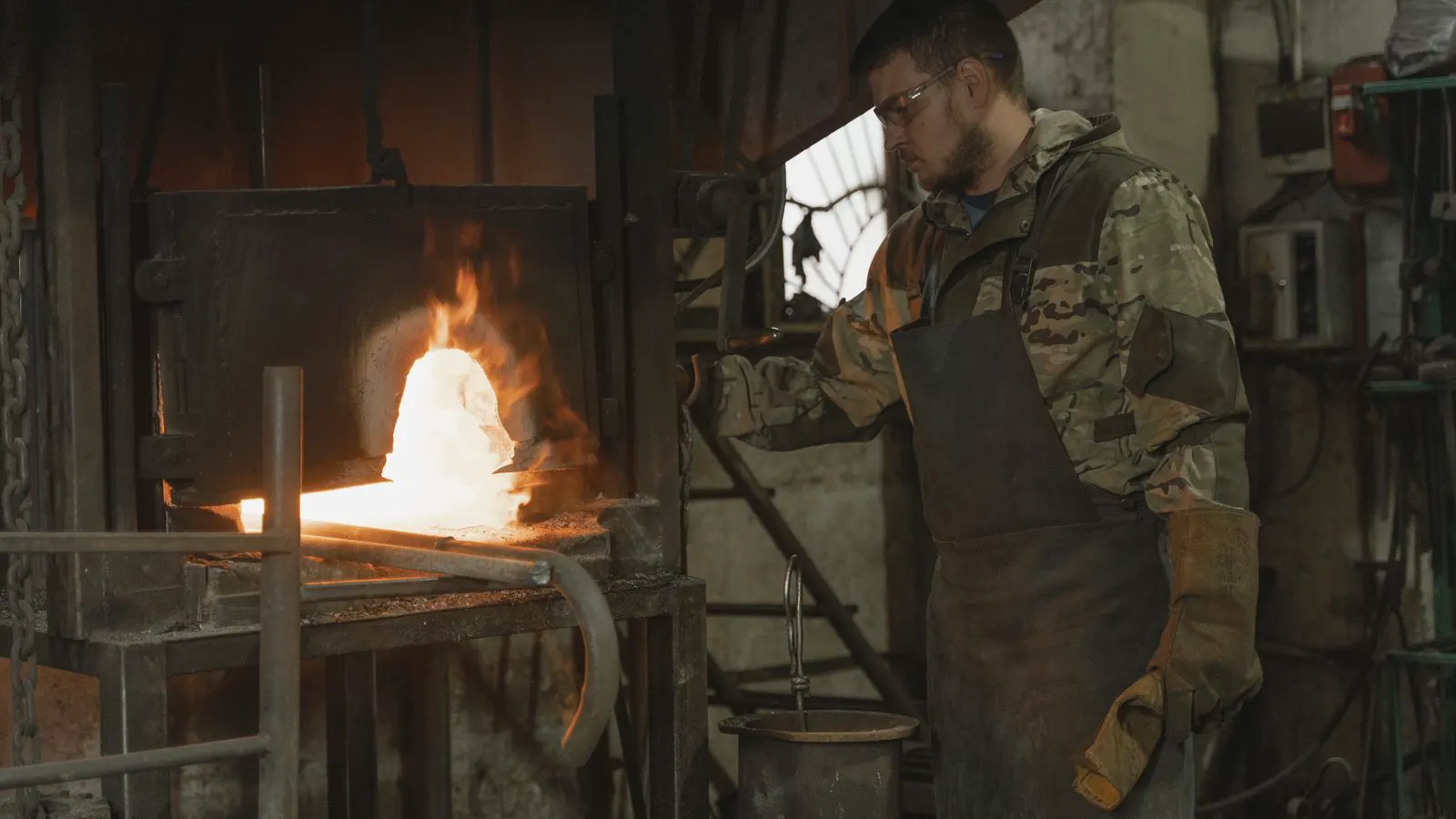
Tempering forged steel reduces brittleness after quenching by allowing carbon to precipitate. This process lets engineers balance hardness and toughness, ensuring parts meet specific mechanical requirements without cracking or failing under stress.
- Tempering converts brittle martensite into tempered martensite, improving toughness.
- Higher tempering temperatures generally yield softer but tougher material.
- Sourcing decisions depend on the specific balance of hardness and toughness required.
- Inconsistent tempering can lead to part failure even if initial hardness is correct.
Why Tempering Is Required After Quenching
When forged steel is heated and quenched, it typically transforms into martensite. This microstructure provides high strength but is inherently brittle. Without further processing, a quenched forged part may crack during machining or fail under impact loads. Tempering is the controlled reheating of the steel to a temperature below its critical transformation range. This step stabilizes the structure and allows the material to perform reliably in service.
For buyers and engineers, understanding this relationship is critical. It is not enough to specify a high hardness value in a drawing. The part must also absorb energy without fracturing. The tempering step is where the final mechanical character of the forged steel is defined.
The Mechanical Relationship Between Hardness and Toughness
Tempering forged steel moves along a specific trade-off curve. As the tempering temperature increases, the hardness and tensile strength generally decrease. Conversely, the toughness and ductility increase. This is not a linear exchange; there are specific temperature ranges where the material reaches optimal combinations of these properties.
For instance, tempering at a lower temperature preserves more of the original martensitic hardness but leaves the material more susceptible to shock. Tempering at a higher temperature sacrifices some hardness to create a more resilient structure that can deform plastically before failing. Engineers must select the tempering temperature based on the application’s demand profile. A gear tooth, for example, needs high surface hardness and sufficient core toughness to handle bending moments.
How Microstructure Changes During Tempering
The physical changes during tempering are what drive the property shifts. In the quenched state, carbon atoms are trapped in a distorted crystal lattice. This trap creates high hardness but low ductility. During tempering, carbon atoms begin to migrate and form small carbide precipitates. This process relieves internal stresses and reduces the brittleness of the martensite.
The size and distribution of these precipitates determine the final properties. Coarser precipitates, formed at higher tempering temperatures, allow for easier dislocation movement, which increases toughness. Finer precipitates, formed at lower temperatures, impede dislocation movement, maintaining higher hardness. This microscopic evolution is the root cause of the macroscopic changes in hardness and toughness that suppliers and engineers manage.
Sourcing Decisions Based on Tempering Requirements
When sourcing forged parts, the tempering specification is as important as the material grade. Two suppliers may use the same steel alloy, but if their tempering temperatures or cooling rates differ, the final parts will have different performance characteristics. A buyer must specify the target hardness range and, where applicable, the required toughness value (such as Charpy impact energy).
If a drawing only lists a hardness requirement, there is ambiguity about the toughness. A part might meet the hardness spec but still be too brittle for the intended use. Conversely, a part might be too soft to maintain its shape. Clear communication of the balance between hardness and toughness helps prevent costly rework or field failures. Buyers should ask suppliers about their tempering processes to ensure consistency.
A Worked Example: Balancing Properties for a Gear
Consider a simple scenario involving a forged steel gear. The application requires the gear teeth to resist wear from contact with a mating surface. However, the gear shaft experiences occasional shock loads from motor startup. If the gear is left untempered, the teeth may be hard enough to resist wear, but the shaft might crack under the startup shock.
If the gear is over-tempered, the teeth may become too soft, leading to rapid wear and tooth breakage under normal loads. The engineer must select a tempering temperature that provides a compromise. The hardness must be high enough to resist surface deformation, while the toughness must be sufficient to absorb the energy of the shock load. By specifying a moderate tempering temperature, the supplier can produce a gear that resists wear and survives startup impacts. This example illustrates how tempering forged steel is a balancing act that directly impacts part longevity.
Common Errors in Tempering Forged Steel
Several errors can compromise the final properties of forged steel. One common issue is quenching distortion. If the part warps during quenching, the subsequent tempering may not restore the original dimensions, leading to fit issues. Another error is under-tempering, which leaves residual stresses in the material. This can cause the part to fail long after it has been installed.
Over-tempering is another risk. It reduces hardness below the functional requirement, causing premature wear. Inconsistent cooling during the tempering cycle can also create uneven properties, where some areas of the part are harder and tougher than others. This lack of uniformity is particularly problematic for large or complex forged sections where heat transfer is uneven.
Best Practices for Specifying Tempering in Procurement
To ensure the best results, buyers should be specific in their procurement documents. Instead of simply stating “tempered,” specify the target hardness range in Rockwell C or HRC. If toughness is critical, include a minimum impact energy value. For critical applications, requesting a heat treatment certificate that documents the actual tempering temperature and time can provide valuable assurance.
Suppliers should be selected based on their ability to maintain consistent heat treatment. A supplier with advanced furnace controls and monitoring systems is more likely to produce parts with uniform properties. By focusing on the mechanical outcome rather than just the material grade, buyers can secure forged parts that perform reliably in their intended applications.
| Tempering Temperature Range | Hardness | Toughness | Typical Application Focus |
|---|---|---|---|
| Low | High | Low | Precision cutting tools |
| Moderate | Medium | Medium | Gears, shafts, structural parts |
| High | Low | High | Shock-resistant components |
- Quenching transforms the steel into a hard but brittle martensitic structure.
- Tempering allows carbon to precipitate, relieving stress and increasing ductility.
- Higher tempering temperatures result in lower hardness but higher toughness.
- Sourcing decisions must account for both hardness and toughness requirements.
- Consistent tempering processes are essential for uniform part performance.
Frequently asked questions
What is the primary purpose of tempering forged steel?
The primary purpose is to reduce the brittleness of quenched martensite. It does this by allowing carbon precipitates to form, which improves toughness and reduces internal stresses.
Can tempering increase the hardness of quenched steel?
No. Tempering always reduces the hardness of quenched steel compared to its as-quenched state. The goal is to find the right balance between the remaining hardness and the gained toughness.
How does tempering affect the dimensions of a forged part?
Tempering can cause slight dimensional changes, usually a small expansion or contraction. However, if the part was distorted during quenching, tempering will not necessarily correct the shape, so pre-tempering machining or stress-relief annealing may be required.
Is there a single "best" tempering temperature for all forged steel?
No. The optimal temperature depends on the specific alloy, the part's geometry, and the required mechanical properties. A lower temperature preserves hardness, while a higher temperature improves toughness.
How can I ensure the forged parts I source have the correct tempering?
Specify the exact hardness range and toughness values in your purchase order. Request heat treatment certificates that document the actual process parameters used by the supplier.