Buyers Guide: Forging Case Hardening Services
Importers and procurement managers should evaluate case hardening forging suppliers by checking material compatibility, depth control, and inspection records. This guide explains how to select providers for induction hardening forgings and other forging surface treatment methods for alloy components.
- Match the hardening method to the alloy and part geometry before selecting a supplier.
- Require documented quench medium and cooling rates to prevent cracking or soft zones.
- Use third-party inspection reports for hardness, depth, and dimensional checks on every lot.
- Verify the supplier can handle distortion control through fixture design and slow cooling.
- Confirm traceability from raw forging through final heat treatment for audit readiness.
Why Case Hardening Matters for Forged Alloy Components
Case hardening creates a hard, wear-resistant surface while leaving the core tough and impact resistant. For forged alloy components such as gears, shafts, flanges, and drive parts, this balance often determines field life. Buyers should not treat case hardening as a simple add-on. It is a material process that changes residual stresses and dimensional stability.
The core question for procurement teams is whether the supplier can control depth, hardness, and distortion on a specific alloy. A forged part that hardens well in a lab may warp on the production line if cooling is uneven. Importers and engineers need a supplier who can explain the heat treatment physics behind their results, not just quote a surface hardness.
Consider a heavy-duty gearbox housing. If the surface layer is too hard, it may spall under shock loads. If the core is too soft, the teeth will deform during peak torque. Case hardening sits between these extremes. The process transforms the metal structure so that the surface resists abrasion while the interior absorbs vibration and impact.
For buyers, this distinction matters because specification language must reflect physics, not just surface finish. A drawing note that demands “hardness” without specifying depth or core properties leaves room for interpretation. The supplier may deliver a part that looks correct on the outside but fails internally. The buyer needs a partner who understands how carbon diffusion, quenching speed, and alloy chemistry interact to produce the final mechanical profile.
What Heat Treatment Methods Are Available for Forging Case Hardening?
Several processes create a hardened case on forged parts. The choice depends on alloy type, part size, and required case depth.
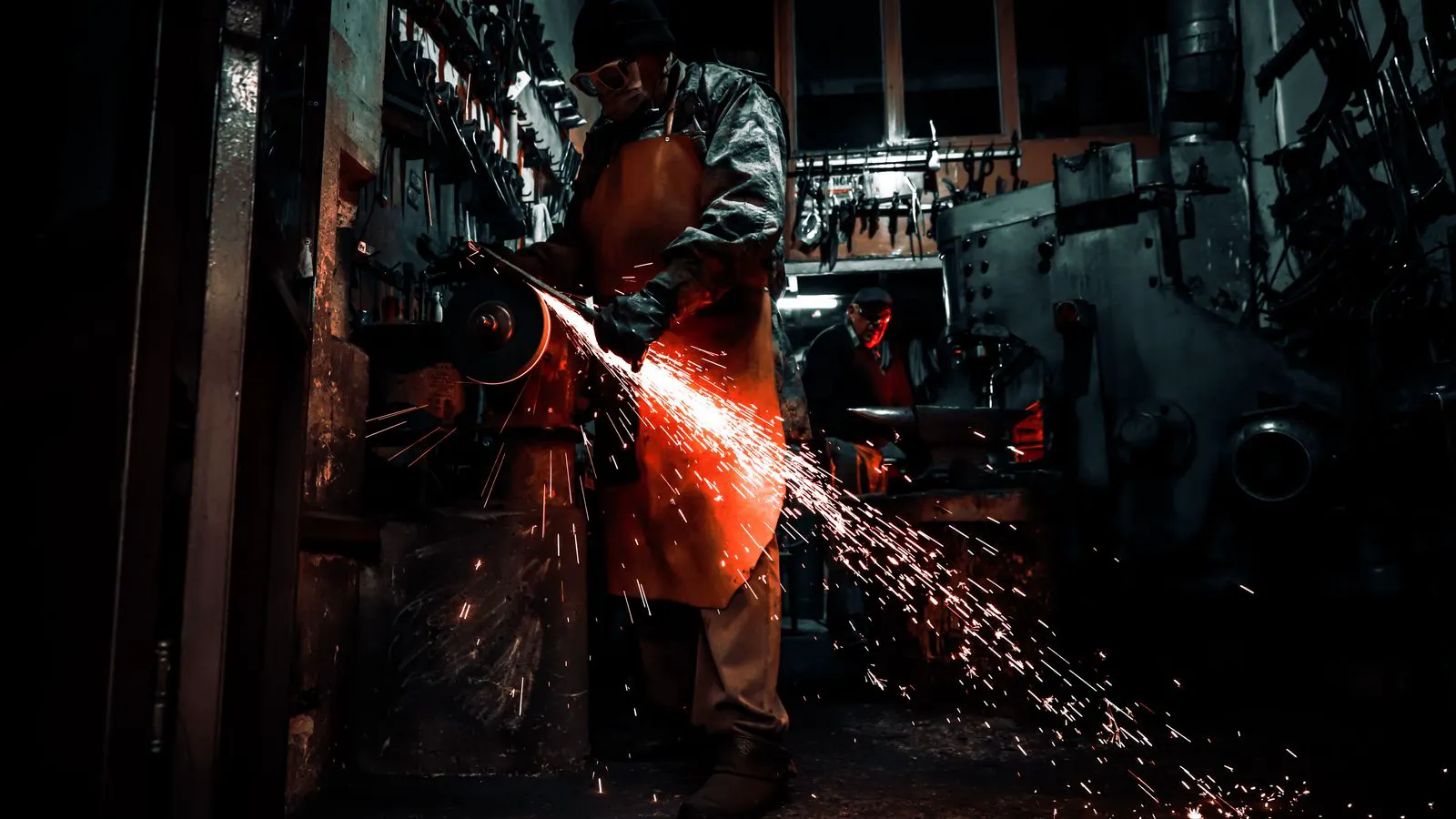
Induction hardening uses a high-frequency electromagnetic coil to heat the surface of the forging. The part is then quenched, often in oil, to freeze the surface structure. This method works well for medium-alloy steels and allows rapid production cycles. It is common for forged gears, camshafts, and high-speed components. The heating is localized, which means only the outer layer transforms. The core stays relatively cool and retains its original toughness. This makes induction ideal for parts with complex geometries where heat must not penetrate deep into the body.
Carburizing adds carbon to the surface before hardening. It is used on low-carbon alloy steels that need deep hard cases. The process is slower and requires longer furnace time. It suits large forgings where core hardness must remain high. Carburizing involves heating the part in a carbon-rich atmosphere, allowing carbon atoms to migrate into the outer layers. This thickens the case and allows for deeper hardness zones. The subsequent hardening step then locks in this structure.
Nitriding is another option for wear resistance, but it usually produces a thinner case. Some buyers specify nitriding after case hardening to improve corrosion resistance and surface fatigue performance. Nitriding introduces nitrogen into the surface without significantly changing the carbon content. It is often used on parts that experience sliding contact and need extended lubrication life. The case is harder than the base metal but generally thinner than a carburized layer.
The selection process starts with the forging material grade. A supplier should confirm the alloy composition before recommending a cycle. If the buyer only specifies “hard surface,” the supplier may guess. Guessing leads to rework. For example, a low-carbon steel forged for a large flywheel may not respond well to induction if the case depth requirement is deep. The buyer must match the material chemistry to the chosen process.
How to Evaluate Case Hardening Forging Suppliers
The criteria below help procurement managers compare suppliers and reduce the risk of defective lots.
| Criterion | What to look for | Why it matters |
|---|---|---|
| Material compatibility | Supplier lists alloy grades they regularly treat | Avoids failed quench cycles and soft zones |
| Depth control | Ability to specify case depth in millimeters or inches | Ensures wear life matches design requirements |
| Quench medium and rate | Documented quench medium, agitation, and cooling rate | Prevents cracking and uneven hardness |
| Distortion control | Fixture design, slow cooling, or post-treatment machining | Protects critical dimensions and concentricity |
| Inspection records | Hardness, depth, metallurgical, and dimensional reports | Provides proof of performance and audit trail |
| Traceability | Heat treatment batch records tied to forging batch | Supports quality assurance and warranty claims |
A strong supplier will ask for your drawing notes and material certificate. They should also ask what failure modes you have experienced with previous lots. If they only ask for part dimensions, they are treating the job as generic.
During the qualification process, request samples of previous work. Ask to see hardness maps and depth profiles. A competent supplier will provide these without hesitation. They should also explain how they control distortion. For instance, a supplier might use vacuum quenching to reduce oxidation and maintain dimensional stability. They might use jigs to hold the part in shape during cooling. These details reveal the depth of their technical capability.
What Inspection Reports Should You Require?
Every lot should come with a heat treatment certificate. The certificate should include the part number, quantity, material grade, heat number, and treatment date. It should also list the cycle parameters used.
For forged parts, the buyer should require the following checks:
- Surface hardness at multiple locations on the case.
- Case depth measurement at the same locations.
- Core hardness, if the core must remain tough.
- Dimensional checks after heat treatment, especially on critical bores, journals, and faces.
- Visual inspection for cracks, discoloration, or surface defects.
Hardness testing usually uses a portable microhardness tester or a macro hardness tester. The report should state the scale, such as Rockwell C or HRC, and the number of readings per part. If the supplier only provides one reading per lot, that is not enough for a production component. Hardness varies across a part. One reading does not prove uniformity. A reliable report will show multiple values, often averaged, to demonstrate consistency.
The depth report is equally important. Case depth is often measured by etching the surface and reading the transition zone under a microscope. The report should state the method and the average depth. If depth varies too much, the part may not wear evenly. For a gear tooth, a shallow case in the root area leads to rapid wear. The report should also mention the standard used for depth measurement, such as ASTM E270, if applicable.
Dimensional checks are critical because heat treatment causes expansion and contraction. A forged shaft may shrink by a measurable amount during quenching. If the buyer does not account for this, the part will not fit into the assembly. The report should list key dimensions before and after treatment. This data helps the buyer adjust their machining tolerances.
How to Specify Case Hardening in Your Drawing or PO
Clear specifications reduce disputes. A drawing note that says “case harden” is too vague. A buyer should specify the method, depth, hardness, and tolerance.
A typical note might read: “Induction case harden to 0.8 mm depth, 60 to 65 HRC surface hardness, 25 to 30 HRC core hardness.” The note should also state the quench medium if the buyer has a preferred medium. For forged flanges and gears, a note about distortion limits helps. For example, “Total length variation after heat treatment not to exceed 0.2 mm.”
The purchase order should reference the material certificate and require a pre-production sample. The sample should go through the full heat treatment cycle before approval. Once the sample passes, the supplier should use the same cycle parameters for production. This step prevents the supplier from experimenting with the first lot. It locks in the process.
If the buyer does not have a preferred method, the supplier should propose one based on the alloy and geometry. The proposal should include a short explanation of why that method suits the part. This explanation helps the buyer verify that the supplier understands the part function. For example, a supplier might recommend carburizing for a large camshaft because the low-carbon alloy needs a deeper case than induction can provide.
Common Problems and How to Reduce Them
Defective case hardened forgings usually trace back to one of three issues: wrong alloy, wrong quench, or wrong depth.
The wrong alloy causes inconsistent hardness. Some forged steels are not suited to induction hardening because they harden too fast or too slow. If the alloy is wrong, the supplier should recommend an alternative or a different process. A supplier who blindly applies a standard cycle to an untested alloy risks producing a soft or cracked part.
The wrong quench causes cracks or soft zones. Oil quenching slows cooling compared with water, which reduces cracking risk for thicker sections. For large forged parts, the quench medium and agitation level matter. A supplier should be able to explain the quench rate and how it was controlled. If the quench is too fast, the surface hardens before the heat from the core can equalize. This creates internal stress that can crack the part later.
The wrong depth causes premature wear or brittle failure. A case that is too shallow wears out quickly. A case that is too deep can make the surface brittle and increase the risk of cracking. The depth must match the wear pattern and impact loads. For a bearing race, the depth must cover the contact zone. For a shaft, the depth must cover the journal.
Buyers should also watch for distortion. Forged flanges and gears can shift shape during quenching. A supplier who uses fixtures or slow cooling can reduce this risk. If the part requires post-treatment machining, the buyer should confirm that the supplier can hold dimensions after heat treatment. Sometimes the supplier performs the machining in-house. Other times, they outsource it. Either way, the final dimensions must meet the drawing.
Decision Checklist
Use this checklist before awarding a case hardening forging contract.
- Confirm the forging material grade and supplier can treat it.
- Define case depth, surface hardness, and core hardness.
- Specify the heat treatment method and quench medium.
- Request a pre-production sample with full inspection reports.
- Agree on distortion limits and post-treatment machining.
- Require lot-level traceability and inspection records.
- Verify the supplier can provide a second opinion if a lot fails.
- Include a clear rework or replacement policy in the PO.
A supplier that passes this checklist is more likely to deliver a lot that meets design life. The buyer should also ask for the supplier’s failure history with similar forgings. A direct answer about past problems shows maturity. A vague answer suggests the supplier has not seen the failure modes before.
Case hardening forging is not just a surface finish. It is a controlled material process that changes the mechanical behavior of the part. Buyers who specify clearly, require documented checks, and verify material compatibility will get better results and fewer field failures.
Frequently asked questions
Can induction hardening be used on all forged alloy steels?
No. Induction hardening works best on medium-alloy steels that respond well to rapid cooling. Some low-carbon or high-alloy forgings need carburizing or a different cycle.
How deep should the hardened case be on a forged gear?
Case depth depends on tooth size, load, and wear pattern. Buyers should specify depth in the drawing and confirm the supplier can hold that depth consistently.
What inspection should be done after case hardening?
Require hardness, depth, core hardness, dimensional checks, and visual inspection. The reports should be lot-specific and tied to the material heat.
Can case hardening cause cracking in forged parts?
Yes, if the quench is too fast or the alloy is sensitive. Use oil quenching or controlled cooling and verify the supplier can manage quench rates.
Should buyers require a sample before production?
Yes. A pre-production sample through the full heat treatment cycle helps confirm cycle parameters and inspection method before bulk orders.