Buyers Guide: Forged Carbon Steel for High-Torque Shafts
Procurement managers need to match carbon steel grade to torque load, geometry, and heat treatment method. This guide outlines selection criteria, common grades, and specification requirements to avoid shaft failure in high-torque applications.
- Match carbon content and alloying elements to the specific torque load and speed requirements of the shaft.
- Confirm the forging mill can produce the required geometry with consistent grain flow and dimensional tolerance.
- Specify the heat treatment method explicitly to ensure the final mechanical properties meet design intent.
- Request material certification and traceability documentation for every production batch.
- Validate the selection with a prototype test that measures actual torque capacity and fatigue resistance.
Why Material Selection Matters More Than Geometry for High-Torque Shafts
A high-torque shaft fails when the material cannot handle the combination of bending, shear, and torsional stresses over its service life. Geometry sets the baseline stress, but the forged carbon steel grade determines whether that stress leads to elastic deformation, plastic yield, or catastrophic fracture. Procurement managers often focus on cost per kilogram and overlook the interaction between grade chemistry, forging process, and final heat treatment. A shaft that passes initial torque testing may still fail months later if the steel lacks the fatigue resistance required for the duty cycle.
The right grade must balance yield strength, fatigue resistance, and toughness. A high-strength steel may handle peak torque but crack at stress concentrations if it lacks toughness. A tougher, lower-strength steel may survive impact but deflect under sustained load. Selection requires evaluating the specific operating profile, not just the maximum torque rating. Consider a mining conveyor drive shaft. It experiences high static torque during start-up and cyclic torque during normal operation. A low-carbon steel might survive the static load but fatigue at the keyway after thousands of cycles. A high-strength alloy steel handles the cycles but risks brittle fracture if the tempering temperature is too low or the surface hardness is uneven. The decision is not about the strongest steel available. It is about the steel that performs reliably under the specific stresses the part will see.
Key Properties to Evaluate in Forged Carbon Steel
Torque resistance in a shaft depends on the material’s ability to resist shear and fatigue. Yield strength sets the limit for elastic deformation. Fatigue strength determines performance under cyclic loading. Toughness prevents crack propagation at keyways, fillets, and other stress concentrators. Engineers often calculate the required strength based on the maximum torque, but they must also consider the frequency of that torque application. A shaft turning at low speed with high torque requires different material behavior than one turning at high speed with moderate torque.
Consider the following properties when reviewing grade specifications:
- Yield strength: Must exceed the calculated maximum shear stress with a safety factor. The safety factor depends on the consequences of failure. If a shaft failure stops a production line, the factor must be higher than if it stops a non-critical auxiliary pump.
- Fatigue limit: Critical for shafts experiencing repeated torque cycles, such as in rotating machinery. The endurance limit of the material must be above the stress amplitude experienced during normal operation.
- Impact toughness: Prevents brittle fracture at low temperatures or during start-up transients. Start-up transients can double or triple the steady-state torque momentarily. The material must absorb this energy without cracking.
- Hardenability: Determines whether the surface can be case hardened or through-hardened to meet surface hardness requirements. If the design requires a hard surface for wear resistance but a tough core for impact resistance, the steel must have sufficient hardenability to achieve the desired case depth.
- Formability: The grade must survive the forging process without cracking, especially in thick sections. Thick sections cool slowly, which can lead to coarse grain structures or internal stresses if not controlled. The grade must be workable enough to flow into the die without breaking.
Common Forged Carbon Steel Grades for High-Torque Applications
Different carbon steel grades serve different torque regimes. Lower-carbon steels offer excellent toughness and formability but yield at lower stress levels. Medium-carbon steels provide a balance of strength and toughness, making them suitable for most industrial shafts. Higher-strength steels handle extreme torque but require careful heat treatment to avoid brittleness. The choice often comes down to the size of the shaft. Larger shafts are harder to harden throughout, so they often use medium-carbon grades that can be through-hardened with a slower cooling rate. Smaller, high-speed shafts can use higher-carbon or alloy grades that can be case hardened to achieve very hard surfaces.
| Grade Type | Carbon Content | Typical Strength Range | Best For |
|---|---|---|---|
| Low Carbon | 0.10 to 0.25% | Moderate yield strength | High-torque, low-speed applications with high impact loads |
| Medium Carbon | 0.25 to 0.50% | Good strength and toughness balance | General industrial shafts, transmission components |
| High Strength | 0.50% to 0.65% | High yield strength, lower toughness | High-torque, compact design applications |
| Alloy Carbon | 0.30% to 0.50% plus alloying | High strength, improved hardenability | Severe service, high-speed shafts |
Medium-carbon steels dominate shaft applications because they achieve adequate strength without excessive brittleness. Alloy carbon steels with elements like chromium or molybdenum improve hardenability, allowing deeper heat-affected zones without quench cracking. Procurement teams should verify the exact alloying specification, as nominal grades can vary between producers. For example, a medium-carbon steel might contain 0.25% to 0.30% carbon in one mill and 0.45% to 0.50% in another. The higher carbon content increases strength but reduces formability. The buyer must specify the exact range required for the application.
The Interaction Between Forging and Final Strength
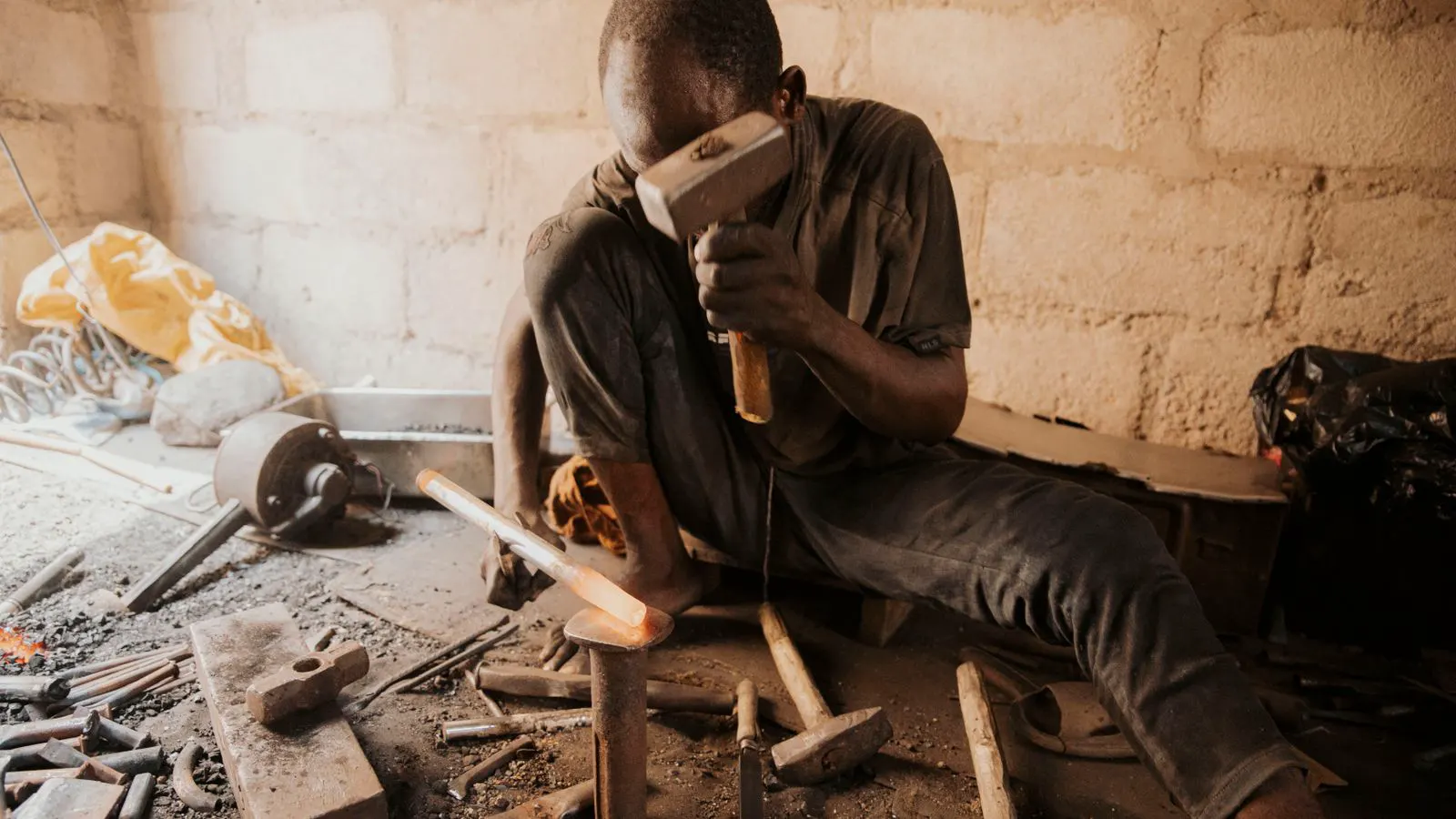
Forging is not a static process. The mechanical properties of the final shaft depend heavily on the forging parameters and the subsequent heat treatment. Grain flow alignment reduces stress concentration and improves fatigue life. A well-forged shaft with aligned grain flow will outperform a cast shaft of the same grade. Grain flow follows the direction of metal movement during forging. In a good forging, the grain structure is oriented parallel to the axis of the shaft. This orientation helps the shaft resist torsional stress more effectively. If the grain flow is chaotic or perpendicular to the stress, the shaft is more susceptible to fatigue cracking.
When specifying forged carbon steel, include forging requirements in the purchase order. Request confirmation that the die design accommodates the shaft geometry without excessive cold working. Cold working can introduce residual stresses that reduce fatigue life. Thick sections require adequate preheat and controlled cooling to prevent internal stresses. The forging mill should provide a process description or a forging report that confirms grain flow direction and dimensional accuracy. A forging report is a document that details the forging temperature, die temperature, and cooling rate. It allows the buyer to verify that the process was controlled. If the report is missing, the buyer cannot be sure the part has the expected mechanical properties.
Heat Treatment Requirements Forged Carbon Steel Shafts
Heat treatment transforms the raw forged material into a high-performance component. The method must match the grade chemistry and the service conditions. Common methods include annealing, normalizing, quench and temper, and case hardening. The selection of heat treatment method is often the most critical step in defining the final mechanical properties. The same forged shaft can have very different strength and toughness characteristics depending on how it is heated and cooled.
For high-torque shafts, quench and temper is the most common route to achieve high core strength. The steel is heated to a critical temperature, quenched to form martensite, then tempered to reduce brittleness. The tempering temperature controls the final hardness and toughness balance. A lower tempering temperature produces a harder, stronger shaft. A higher tempering temperature produces a tougher, more ductile shaft. The engineer must select the tempering temperature based on the required balance. For a shaft that will experience impact loads, a higher tempering temperature is usually preferred. For a shaft that will experience high bending stress, a lower tempering temperature may be better.
Case hardening is appropriate when surface hardness matters more than core strength. It provides a hard surface layer that resists wear while maintaining a tough core. This is common for shafts with keyways or splines that experience sliding contact. The case depth is the thickness of the hard layer. It must be deep enough to protect the surface but not so deep that it compromises the core toughness. The specification must define the minimum and maximum case depth. Without this, the heat treat vendor may produce a part that is too hard on the surface or too soft in the core.
Specify the heat treatment method explicitly in the drawing. State whether the shaft requires through-hardening or surface treatment. Define the minimum and maximum hardness values for the core and, if applicable, the case depth. Without these specifications, the heat treat vendor may select a default process that does not meet the design intent. The drawing is the contract between the designer and the manufacturer. It must be clear and unambiguous.
Specification and Documentation Requirements
A vague material specification leads to inconsistent parts and potential failure. The purchase order and technical drawing must define the exact grade, heat treatment, and testing requirements. Request material certificates for each heat number. These documents confirm the chemical composition and mechanical properties of the raw steel before forging. A material certificate is a document issued by the steel producer. It lists the chemical composition, heat number, and test results for the raw steel. If the raw steel is out of specification, the forging mill must reject it. The buyer must ensure the mill follows this rule.
Forging certificates should confirm that the forging was produced from the specified heat number. For high-torque applications, request additional testing on the finished part. This may include tensile testing, hardness testing, and non-destructive inspection for internal defects. Tensile testing measures the ultimate strength and yield strength of the part. Hardness testing measures the surface and core hardness. Non-destructive inspection, such as magnetic particle testing or ultrasonic testing, detects internal cracks or inclusions. The inspection method depends on the size and shape of the part. A large shaft may require ultrasonic testing to detect internal flaws that magnetic particle testing cannot see.
Include acceptance criteria in the purchase order. Define the acceptable dimensional tolerances, surface finish, and hardness ranges. Specify the sampling plan for destructive testing. Clear documentation protects the buyer and provides a basis for quality disputes if issues arise. If a shaft fails in service, the buyer needs to know what was specified and what was received. The documentation serves as a record of the quality requirements. It also helps identify the root cause of a failure. If the failure is due to a material defect, the documentation helps trace the problem to the steel producer or the forging mill.
Decision Checklist for Selecting Forged Carbon Steel
Use this checklist to validate your material selection before releasing the purchase order.
- Confirm the maximum torque, speed, and duty cycle from the engineering design. The duty cycle includes the number of start-stops and the variation in torque over time.
- Select the carbon steel grade based on the torque profile and service conditions. Consider the temperature range and the presence of corrosive environments.
- Verify the forging mill can produce the geometry with the required grain flow. Review the mill’s die design and forging process.
- Specify the heat treatment method and final mechanical properties. Include the hardness values and case depth, if applicable.
- Request material and forging certificates for traceability. Ensure the certificates are provided with the shipment.
- Define acceptance testing and inspection requirements in the purchase order. Include the inspection methods and sampling plans.
- Validate the selection with a prototype test under actual operating conditions. Run the prototype for a defined period and monitor for wear or vibration.
- Confirm lead time and production capacity with the forging supplier. Ensure the supplier can meet the delivery date.
- Review the cost against the risk of failure. A slightly higher-grade steel may reduce lifecycle cost if it prevents downtime.
- Document the selection rationale for future reference and supplier audits. Store the engineering calculations and material selection report with the project files.
Selecting the right forged carbon steel for high-torque shafts is a technical procurement decision. The grade must match the mechanical demands, the forging process must support the geometry, and the heat treatment must deliver the final properties. Procurement managers who specify these elements clearly and validate them through testing will reduce the risk of shaft failure and avoid costly redesigns.
Frequently asked questions
Can I use a cast steel shaft instead of a forged one for high-torque applications?
Casting is cheaper but produces isotropic material with visible grain boundaries. For high-torque shafts, forging provides aligned grain flow that improves fatigue life and toughness, making it the preferred choice for demanding applications.
How do I know if my selected grade needs case hardening or through-hardening?
Case hardening is for shafts where surface wear is the primary failure mode. Through-hardening is for shafts where core strength is critical to handle the full torque load. The engineering design determines which failure mode to prioritize.
What happens if I select a high-strength steel without proper heat treatment?
Without quench and temper, high-strength carbon steel remains in a soft or brittle state. It may not achieve the required yield strength or may crack during service due to excessive brittleness.
Are alloy carbon steels always better than plain carbon steels?
No. Alloy steels offer improved hardenability and strength but at higher cost. For many standard high-torque shafts, a well-heat-treated medium-carbon plain steel performs adequately and reduces procurement cost.
How much lead time should I expect for forged carbon steel shafts?
Lead time varies by complexity, size, and heat treatment requirements. Simple medium-carbon shafts may take several weeks. Complex alloy shafts with specific heat treatment can take longer. Confirm the supplier's current capacity before committing.