Hot Forging vs Cold Forging: Cost and Tolerance
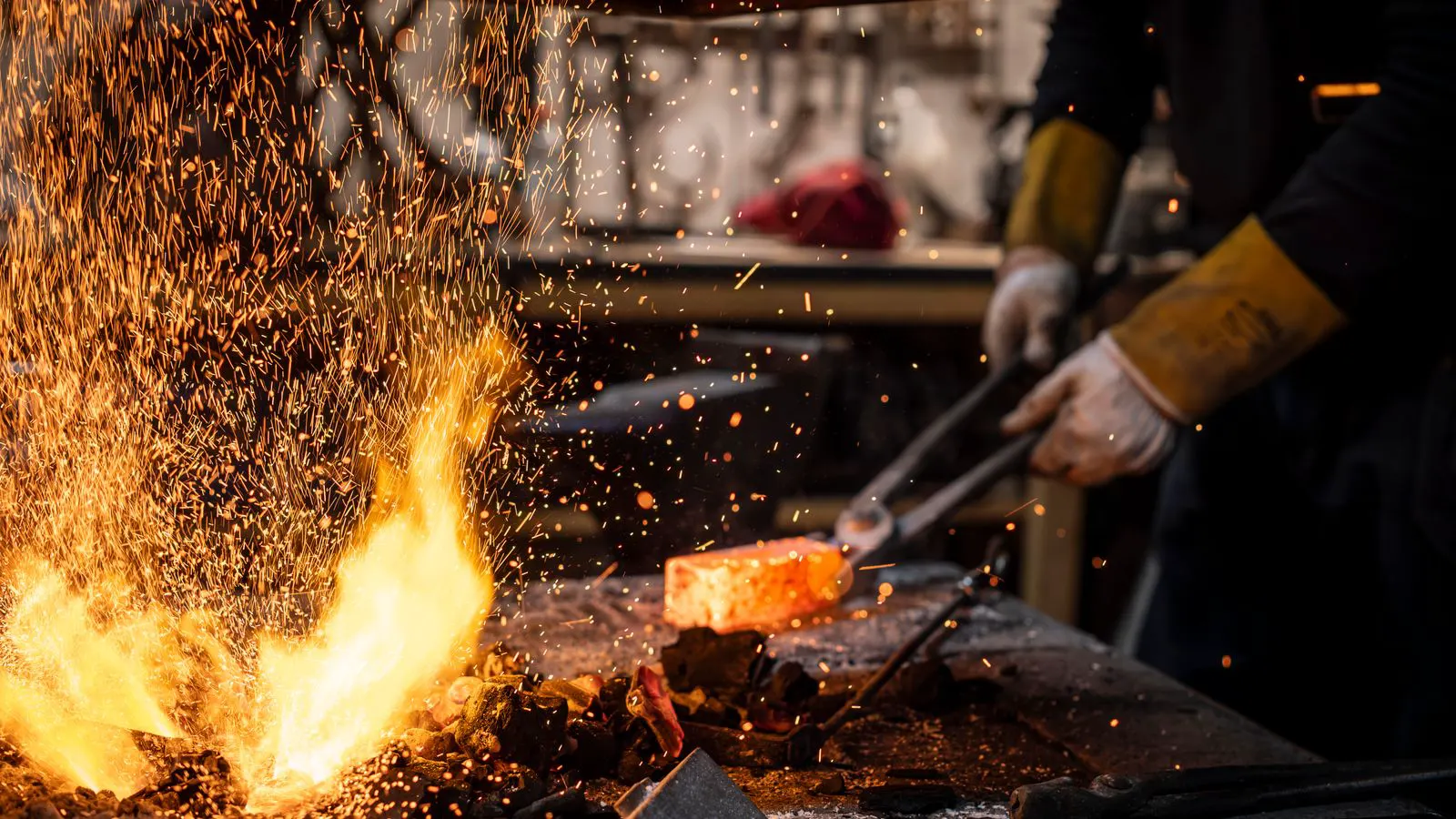
Hot forging reduces material cost for large or heavy parts but needs machining. Cold forging delivers tight dimensional tolerance with lower post-processing. Choose based on part size, material, and precision needs.
- Hot forging costs less per part for large or complex shapes but requires machining.
- Cold forging offers tighter tolerance and surface finish with less post-processing.
- Lead time depends on die cost, material stock, and volume.
- High-volume small parts often favor cold forging.
- Large structural or alloy parts often favor hot forging.
When the part size changes the decision
Part size drives the first cost split. Hot forging is generally used for larger blanks, thicker sections, or parts that need high strength in the final form. Cold forging works best for smaller, thinner, or high-volume parts where surface finish and dimensional control matter more than raw material savings.
A structural bracket with a thick flange may be cheaper to hot forge because the die can open up material quickly. A small fastener or connector with tight thread dimensions is usually better cold forged. The material moves in controlled stages, and the die holds the final shape with less heat-related distortion. The physical constraints of the press set the boundary. A 50-ton press can push a cold forming die, but the force required to deform a thick carbon steel bar at room temperature may exceed the machine capability. The same press may handle a smaller, softer aluminum part with ease.
When the cross-section area increases, the resistance to plastic deformation rises. Hot forging overcomes this by raising the temperature, which lowers the yield strength of the metal. This allows a single blow to shape a heavy component. Cold forging relies on the press force to overcome the full yield strength of the cold metal. If the part is too thick, the press may not have enough tonnage, or the die may break under the load.
How material choice affects the cost structure
Material affects both energy cost and die wear. Carbon steels and low-alloy steels are common in both methods. Aluminum, copper, and some stainless grades are more often cold forged because they are easier to form at room temperature. Hot forging is used for harder alloys where cold working would require too much force or cause cracking.
Aluminum parts can be cold forged with good surface quality. The same alloy, if made hot, may need more cleanup. Stainless parts often need heat treatment or special care. The supplier’s press capacity and die design matter as much as the material itself.
The choice of steel grade changes the die life. A mild carbon steel is relatively soft and easy to form. It wears die surfaces slowly. A high-strength low-alloy steel, often used for automotive suspension or structural components, is harder and more abrasive. It accelerates die wear and may require harder die materials, such as high-speed tool steel or carbide inserts, which increase the initial tooling cost.
Hot forging of stainless steel presents a different set of challenges. Stainless steels have low thermal conductivity, meaning heat stays in the part longer and the die may overheat. The material also tends to crack if it is not heated evenly. Cold forging stainless is possible for thinner sections, but the high work hardening rate means the die must be designed with large radii to avoid stress concentrations.
Where dimensional tolerance changes the post-processing budget
Tolerance is the main reason to choose cold forging. Cold forging can hold smaller tolerances and smoother surface finish because the metal is worked at a temperature where it resists flow less. Hot forging creates a rougher surface and a shape that can shift with cooling.
Machining is the usual fix for hot forged parts. A turned shoulder, a drilled hole, or a milled face can remove the excess. If the part needs several machined features, the cost of hot forging may disappear. If the part needs only a light deburr, cold forging can save money.
Consider a flanged pipe fitting. A hot forged blank will have a rough outer surface and a flange face that is not flat. Machining the flange face to a gasket-ready finish, turning the thread, and drilling the bore can consume a significant portion of the raw material. The metal removed becomes scrap. In cold forging, the flange face is compressed flat against a hardened die plate. The thread is formed in a separate station. The final part may require only a chamfer and a deburr. The material removed is minimal, often just a thin layer of oxide.
Surface finish also impacts downstream assembly. A cold forged part has a smooth, uniform surface that can accept paint or plating evenly. A hot forged part may have scale, scale removal marks, or rough grain lines. Cleaning a hot forged part often involves shot blasting or pickling, which adds labor and chemical costs. For a part that goes directly into a visible housing, the cold forged surface is often preferred to avoid cosmetic rework.
The die cost and volume trade-off
Dies are the big fixed cost in either process. A hot forging die may be simpler because it opens and closes around a pre-formed blank. A cold forging die often has multiple stations that progressively shape the part. More stations mean more tooling.
For low volumes, the die cost per part is high. For high volumes, the per-part cost drops. Cold forging dies can be more expensive because the tooling must hold tight tolerances and survive repeated compression. Hot forging dies may be cheaper to start but may need more frequent replacement if the part is large or the material is abrasive.
A buyer should ask for a die life estimate. If a die lasts only a few thousand shots, the cost per part rises quickly. If it lasts many cycles, the fixed cost spreads across more units.
Die life depends on several factors. The hardness of the die material is the primary one. Soft tool steel is cheap but wears fast. Hard tool steel lasts longer but is expensive to machine and repair. The die geometry matters as well. Sharp corners collect stress and crack. Large radii distribute the load. The die design must also account for the material’s flow behavior. If the metal does not fill the die cavity evenly, the stress concentration increases, leading to faster failure.
For hot forging, the die face is exposed to extreme temperatures. Thermal fatigue is a major failure mode. The metal expands and contracts with every cycle, causing micro-cracks. A cold forging die does not have thermal cycling, but it faces high compressive stress. The die surface can work harden over time, becoming harder and less able to hold a fine surface finish. Both processes require regular inspection and die maintenance.
Lead time from raw material to finished part
Lead time is not just press time. It includes die making, material procurement, heat treatment, machining, and inspection. Hot forging can be faster for large parts because the die cycle is often shorter. Cold forging may take longer per part if the die has multiple stations.
Material availability can delay either process. Hot forging often needs material at temperature. Cold forging needs material in a specific condition, such as annealed or cold-worked. A supplier with in-house heat treatment can shorten the chain.
A simple check: ask for the die lead time, the material lead time, and the first-article inspection time. Those three dates usually set the real start date.
The die lead time is often the bottleneck. A simple hot forging die might take a few weeks to design and machine. A complex cold forging die with multiple stations can take several months. The material lead time depends on the grade and the quantity. Standard carbon steel bars are usually in stock. Specialty stainless steels or alloy steels may need to be ordered from the mill and annealed, which adds weeks to the schedule.
First-article inspection is critical. After the die is installed and the first part is produced, it must be measured against the drawing. If the die is out of tolerance, it must be adjusted or reworked. This process can take days. For a long production run, this initial check ensures the entire batch meets specification. For a prototype, this is the only check, so the cost per part is high.
When to pick each process
Pick hot forging when the part is large, thick, or made from a material that is hard to cold work. It is also the right choice when the final shape needs strength from uniform grain flow and when machining can remove the excess.
Pick cold forging when the part is small, when tolerance is tight, or when surface finish matters. It is also the right choice when the part has threads, holes, or fine features that would be costly to machine.
Pick a hybrid approach when the part is in between. Some parts are hot forged to near shape and then cold worked at one or two stations to tighten the final dimensions. This can reduce machining while still using the strength of hot forming.
The decision also depends on the production volume. For a one-off prototype or a small batch of ten parts, hot forging is often easier to manage. The die cost is high, but the volume is too low to amortize a complex cold forging die. For a continuous run of thousands of parts, cold forging becomes more attractive. The die is expensive, but the per-part cost is lower, and the consistency is higher.
Process comparison
| Option | Best for | Limitations |
|---|---|---|
| Hot forging | Large or thick parts, high-strength alloys | Rough surface, needs machining, heat distortion |
| Cold forging | Small parts, tight tolerance, good surface finish | Higher die cost, material limits, slower for large parts |
| Hot then cold hybrid | Medium parts needing near-net shape and tight features | More complex tooling, longer cycle, higher setup cost |
| Hot with machining | Structural parts, thick sections, low tolerance needs | Machining cost, material removal, extra inspection |
| Cold with minimal cleanup | Fasteners, connectors, precision components | Material size limits, die wear, not for very thick sections |
A practical example
Consider a stainless steel connector that is small but needs a clean thread and a flat mounting face. Hot forging would produce a rough blank. The thread and face would need machining. The part may still be cheaper if the material cost is low, but the machining adds time and cost.
Cold forging would produce the thread in the die. The mounting face could be close to final size. The part may need only a light deburr. The die cost is higher, but the per-part cost drops as volume rises.
Now consider a cast-iron-like steel bracket with a thick flange and a hollow center. Hot forging can shape the flange and open the center in one cycle. Cold forging would require multiple stations and may not hold the thick section well. The bracket is better hot forged, then machined at the mating surfaces.
In the connector example, the thread pitch must be precise. Machining a thread on a small stainless part is slow and requires a rigid machine. A cold forming die can form the thread in milliseconds. The force required to form the thread in the die is high, but the die is designed to handle it. The surface finish of the thread is uniform, which improves the mechanical properties of the fastener.
In the bracket example, the hollow center requires the die to open in the middle of the part. This is a complex die geometry. Hot forging allows the metal to flow into the cavity as the die opens. Cold forging would require the metal to be drawn into the cavity, which is difficult with a thick section. The bracket would likely need to be hot forged, then the mating surfaces machined to ensure flatness.
Common mistakes in cost comparison
One mistake is comparing only the press cost. The press cost is a small part of the total. Die cost, material, heat treatment, machining, and inspection are often larger.
Another mistake is ignoring tolerance. A part with loose tolerance can be hot forged and machined. A part with tight tolerance may need cold forging even if the material is expensive.
A third mistake is assuming one supplier can do both well. Some shops are strong in hot forging. Others are strong in cold forging. A shop that specializes in one method may have better tooling and inspection.
Buyers often look at the raw material cost and assume the cheaper material leads to the cheaper part. This ignores the process cost. A high-grade alloy steel may be expensive per kilogram, but if it can be cold forged with minimal post-processing, the total cost may be lower than a cheaper carbon steel that requires extensive machining.
Another mistake is not considering the life of the die. A die that lasts ten thousand shots is cheaper per part than a die that lasts a thousand shots. The quote must include the die cost and the expected life. If the volume is low, the die may not be recovered, but the per-part cost must reflect that.
How to ask the supplier for a better quote
Ask for the die cost and die life. Ask for the material cost per kilogram or per part. Ask for the press cycle time. Ask for the post-processing steps. Ask for the inspection method.
A good quote will break these out. A vague quote that says “forging cost” hides the real decision. If the supplier cannot explain the die life or the tolerance method, ask again.
Specific questions to ask include: What is the tolerance on the critical dimensions? How is the surface finish achieved? What is the expected die life in cycles? What is the lead time for the die? What is the material specification? What is the heat treatment process? What is the inspection method for first article and production?
The supplier should be able to provide a detailed breakdown. If they cannot, it may be a sign that they are not experienced in the process or that they are not confident in the design. A good supplier will ask you questions about your application, your tolerance requirements, and your volume. They will suggest the best process based on your needs.
Final selection rule
Use hot forging when material cost and part size matter more than surface finish. Use cold forging when tolerance and surface finish matter more than raw material cost. Use a hybrid when the part is in between and the buyer can pay for the extra tooling.
The best choice is not the cheapest process on paper. It is the process that hits the tolerance, the strength, and the delivery date with the lowest total cost.
Frequently asked questions
Is cold forging always cheaper than hot forging?
No. Cold forging can cost less per part for high-volume small parts because it needs less machining. For large or thick parts, hot forging is usually cheaper.
Can hot forging meet tight tolerances?
Not directly. Hot forging usually produces a rougher shape. Tolerances are often corrected with machining. If the tolerance is very tight, cold forging is usually the better choice.
Which process has a shorter lead time?
It depends on the part and supplier. Hot forging can be faster for large parts. Cold forging can be faster for small parts with many stations. Ask for die lead time and material lead time.
Do I need a new die for each part?
Yes, each part usually needs its own die. The die cost is a fixed cost. For low volumes, the cost per part is higher. For high volumes, it drops.
Can I use hot forging for small precision parts?
Usually not. Small precision parts are better cold forged because the die can hold tighter tolerances and surface finish. Hot forging would likely need more machining.


