Comparison: Hot Rolling vs Forging for High-Strength Alloy Steel
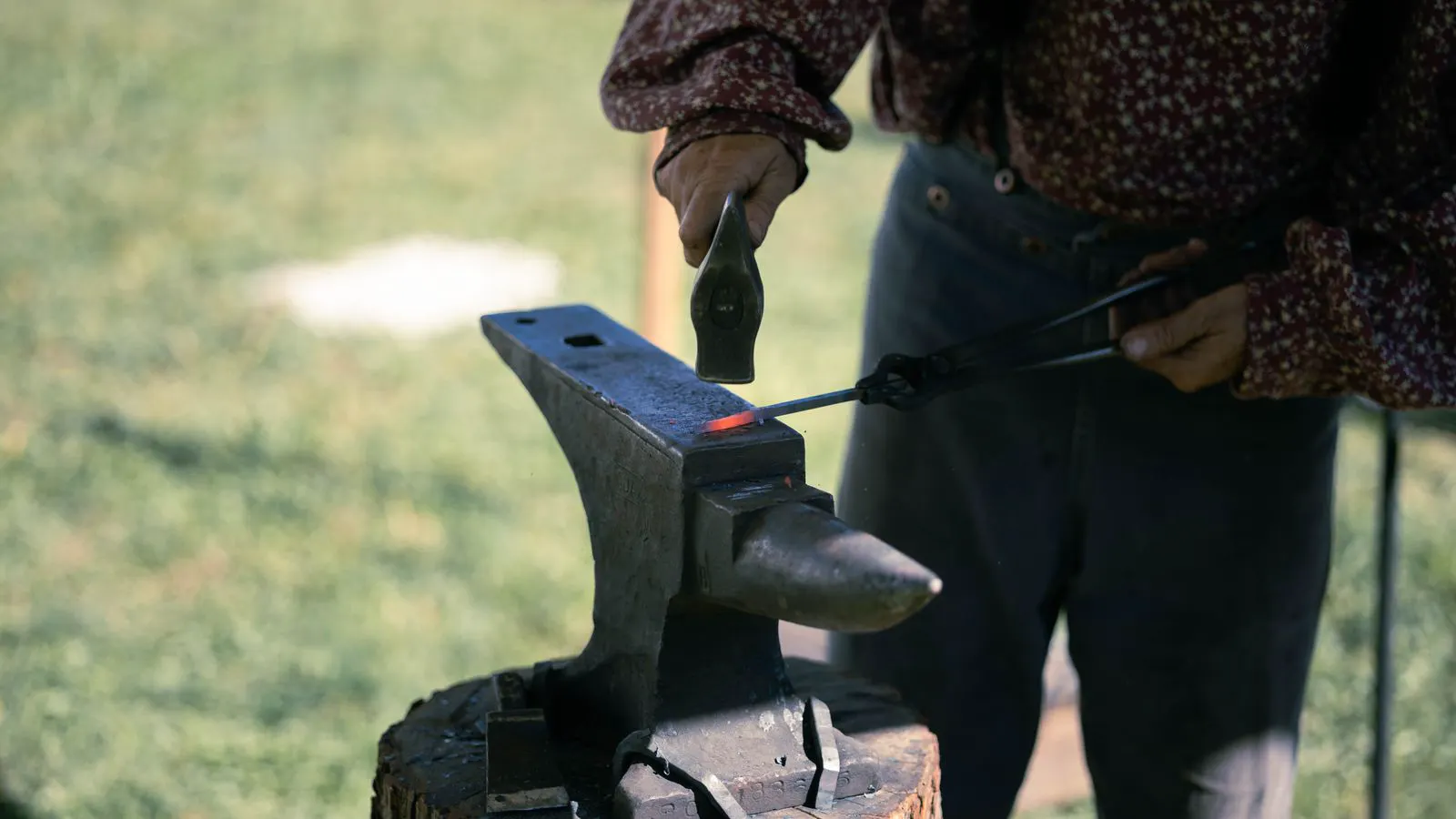
Forging vs hot rolling depends on strength, shape, and volume. Forging offers higher strength and tighter tolerances but higher tooling costs. Hot rolling is cheaper for long, simple shapes. Choose based on mechanical specs, part geometry, and production run size.
- Forging produces higher strength and better grain flow than hot rolling for the same alloy steel.
- Hot rolling reduces material cost for long, uniform shapes like bars, plates, and beams.
- Tooling and setup costs shift the break-even point between the two processes.
- Lead time often favors hot rolling due to lower complexity and shorter setup cycles.
- Procurement teams should match the process to the mechanical requirements and part geometry.
Why the Choice Matters for Alloy Steel
High-strength alloy steel parts demand a clear match between the forming process and the final mechanical specification. Procurement teams often weigh forging against hot rolling because both methods use the same base material but deliver different results. The decision affects strength, dimensional tolerance, production volume, and total cost.
The right choice depends on whether the part requires high yield strength, tight tolerances, or a simple long shape. Forging is typically selected for components where grain flow and mechanical integrity drive the design. Hot rolling is common for structural elements, bar stock, and plates where uniformity matters more than peak strength.
In practice, the distinction becomes visible during quality control. A forged shaft often shows a grain structure that follows the stress lines of the component. A rolled beam shows a structure that runs parallel to the span. This difference is not just academic. It determines how the part behaves under cyclic loading. If a component undergoes millions of load reversals, the forged structure usually resists crack initiation better. If a component carries static loads over a long distance, the rolled structure performs adequately at a lower price point.
Engineers must also consider the interaction between the forming process and subsequent heat treatment. Alloy steels often require quenching and tempering to reach their final hardness. Forging changes the residual stress pattern in the material. These residual stresses can be beneficial or detrimental depending on the final heat treatment cycle. Hot rolling creates its own pattern of stresses, which are generally different in magnitude and direction. The buying team must ensure the selected process aligns with the intended heat treatment protocol.
Strength and Grain Flow Differences
The core difference between forging and hot rolling is how the metal grain structure responds to deformation. Forging compresses the material in multiple directions, aligning the grain flow with the part shape. This reduces internal voids and creates a stronger cross-section.
Hot rolling stretches the metal into long shapes. The grain flow follows the length of the bar or plate. This method is efficient but does not offer the same multidirectional compression. For parts that experience high stress at corners or complex geometries, forging often provides a performance advantage.
Consider a gear blank. When forged, the grain flow wraps around the tooth profile. The root of the tooth, which is the most critical area for fatigue failure, has a grain structure that supports the load directly. When a gear is made from rolled material and then machined, the grain flow runs in one direction. The tooth root may have grain boundaries crossing the stress lines. This can act as a crack initiation site. Under high torque loads, the forged gear typically lasts longer before pitting or spalling occurs.
The mechanical benefit is most noticeable in high-strength alloy steels used in shafts, gears, and structural frames. Forging can achieve higher fatigue resistance because the grain structure supports load distribution better. Hot rolling remains viable when the application tolerates the lower peak strength or when the part geometry is simple.
There is a nuance here. Forging is not always stronger in every dimension. If the forging parameters are not controlled, the grain flow can be distorted. Poor die design can cause the grain to cross the critical load paths. Conversely, high-quality hot rolling can produce very consistent material properties. The key is that forging offers more control over the anisotropy of the final part. You can direct the strength where it is needed most.
The Comparison Table
| Option | Best for | Limitations |
|---|---|---|
| Forging | Complex shapes, high-strength parts, tight tolerances | High tooling cost, lower production speed, setup time |
| Hot Rolling | Long shapes, plates, bars, high-volume simple parts | Lower strength, limited geometry, grain flow follows length only |
| Combination Approach | Hybrid parts, staged production | Complex supply chain, coordination challenges |
The table highlights the trade-offs. Forging wins on mechanical performance and shape complexity. Hot rolling wins on cost and speed for uniform shapes. The combination approach is less common but useful when a single part requires both a forged core and rolled flanges.
For example, some heavy machinery housings use a forged core for the main load-bearing walls and rolled plates for the non-critical panels. This hybrid approach allows the manufacturer to meet the high-strength requirements at the joints while keeping the overall cost manageable. However, this requires precise coordination between the forging shop and the rolling mill. The dimensions must match exactly, or the welding and assembly stages will suffer from fit-up issues.
When to Choose Forging
Select forging when the part must meet high yield strength specifications. This is typical for aerospace components, automotive suspension parts, and heavy machinery shafts. The grain flow alignment in forged parts reduces stress concentrations at bends and corners.
Forging also allows tighter dimensional tolerances. This reduces the need for secondary machining. For parts with complex features, forging can produce the shape in one or two operations, whereas hot rolling would require additional forming or welding.
Think about a connecting rod for a high-performance engine. The rod must withstand immense compressive and tensile forces every cycle of the engine. The cross-section is not uniform. It tapers from the big end to the small end. Forging allows the metallurgist to direct the grain flow along this taper. The material at the big end, which sees the highest loads, can have a grain structure optimized for compression. The material at the small end can be optimized for bending. Hot rolling cannot achieve this localized optimization. The grain flow would be uniform along the length of the bar from which the rod was cut. This uniformity is a disadvantage in this application.
The cost structure for forging is front-loaded. Die making and setup require significant investment. However, for production runs exceeding a few thousand units, the per-unit cost drops. Forging is the right choice when mechanical performance and shape complexity outweigh the initial tooling expense.
There are also quality control advantages. Forged parts are inspected for internal defects using ultrasonic testing. Because forging is a compression process, it is harder for internal voids to form compared to casting. This makes forged parts more reliable for safety-critical applications where a hidden defect could lead to catastrophic failure.
When to Choose Hot Rolling
Choose hot rolling when the part is a long, uniform shape. This includes structural beams, bar stock, and plate material. Hot rolling produces these shapes efficiently with minimal tooling. The process is continuous, allowing high throughput.
Hot rolling is also the better choice for high-volume production of simple parts. The material cost per unit is lower because the process is less complex. There are no dies to maintain or replace. The grain flow is predictable and consistent along the length of the material.
Consider a bridge girder. The primary loads are bending and shear. The cross-section is often an I-beam or a box section. These shapes can be produced by hot rolling through a series of stands. Each stand shapes the cross-section slightly. The final product is a long, consistent member. The grain flow runs lengthwise. For a bridge girder, this is sufficient. The steel does not need to be forged because the stress distribution is linear and predictable. The cost savings from rolling a million tons of steel are substantial. Using forging for such a volume would be economically unviable and technically unnecessary.
The limitation is geometry. Hot rolling cannot easily produce parts with complex cross-sections or high-strength requirements at stress points. If the part has bends or varied cross-sections, hot rolling may require additional forming or welding. This increases cost and lead time.
In some cases, hot rolled material is used as a starting point for further forming. For example, a hot rolled bar might be heated and pressed into a simpler shape. This is a hybrid technique, but it still relies on the initial efficiency of rolling. The key decision factor is whether the final part needs the multidirectional compression that only true forging provides.
Cost and Lead Time Considerations
Alloy steel cost is a major factor in both processes. The raw material price is similar, but the forming cost differs. Forging adds the cost of dies, setup, and higher labor intensity. Hot rolling has lower forming costs due to continuous production and minimal tooling.
Lead time varies by production volume and part complexity. Forging requires die preparation and setup, which can extend the timeline for new projects. Hot rolling is faster for standard shapes because the process is well-established and equipment is readily available.
Procurement teams should consider the total cost of ownership. A forged part may cost more upfront but reduce long-term maintenance due to higher strength. A rolled part may save money initially but fail sooner under high stress. The break-even point depends on the part life cycle and stress conditions.
Let us look at a specific scenario. A mining company needs a set of drive shafts for its conveyor system. These shafts are subjected to constant vibration and impact loads. A rolled shaft might be 20% cheaper to buy. However, if the shafts fail after two years, the downtime for replacement and repair far exceeds the initial savings. A forged shaft might last five years. The total cost over the five-year period favors the forged shaft, despite the higher purchase price.
Lead time is another critical factor. Forging dies are often made from tool steel and require careful machining. The approval process for new dies can take weeks. During this time, the project is on hold. Hot rolling lines can ramp up quickly. If the project deadline is tight, hot rolling may be the only option, even if the mechanical advantage of forging is desirable.
Practical Examples
Consider a high-strength alloy steel shaft for a heavy-duty crane. Forging is the standard choice. The shaft must withstand high torsional stress and fatigue loads. The grain flow from forging aligns with the stress lines, extending the part life.
Now consider a steel beam for a building frame. Hot rolling is the standard choice. The beam must span a long distance and carry uniform loads. The grain flow from rolling follows the length, which is sufficient for the application. The cost savings from rolling make it the practical choice.
These examples show how the process choice follows the mechanical requirements. For parts with high stress and complex geometry, forging is preferred. For parts with uniform loads and simple shapes, hot rolling is preferred.
Another example is the manufacturing of automotive control arms. These parts are subjected to complex bending and twisting forces as the vehicle moves over uneven terrain. The geometry is often asymmetric, with thicker sections at the mounting points to handle the highest loads. Forging allows the engineer to thicken the material exactly where it is needed and thin it where it is not. This reduces part weight, which improves fuel efficiency. Hot rolling would produce a uniform bar that must be heavily machined down to the desired shape. This wastes material and increases the machining cost.
Decision Framework for Procurement
Use this framework to evaluate the right process:
- Define the mechanical specification. What yield strength and fatigue life are required?
- Analyze the part geometry. Is the shape simple and uniform, or complex with varied cross-sections?
- Assess the production volume. Is the run large enough to justify forging tooling?
- Evaluate the lead time. Can the project tolerate the setup time for forging?
- Calculate the total cost. Include material, forming, machining, and expected life cycle cost.
This framework helps procurement managers move beyond intuition. The right process is the one that meets the specification at the lowest total cost. Forging and hot rolling are not interchangeable. Each has a clear domain where it performs best.
Step one, defining the mechanical specification, is often the most neglected. Many buyers focus on the initial price tag. They should first ask what the part must do. If the part is used in a rotating machinery where fatigue life is critical, the specification will likely point toward forging. If the part is a static structural member, the specification may allow for rolled material.
Step two, analyzing the geometry, is straightforward but critical. If the part has thin walls and complex curves, forging is almost mandatory. If the part is a straight bar or a flat plate, rolling is the natural choice.
Step three, assessing volume, determines the economics. For low-volume, prototype parts, the cost of forging dies may be prohibitive. In such cases, engineers might use a different process, such as casting or machining from billet, to avoid the tooling cost. However, for production runs, the per-unit cost of forging drops significantly.
Common Mistakes to Avoid
A common mistake is choosing hot rolling for a part that requires high strength. This leads to premature failure and costly redesigns. Another mistake is using forging for a simple, high-volume part where hot rolling would be cheaper.
Teams also underestimate the lead time for forging. New die designs take time to approve and produce. Hot rolling is faster for standard shapes. Procurement teams should build this time into the project schedule.
Finally, do not ignore the machining requirements. Forged parts often need less machining than rolled parts. This can offset the higher forming cost. Always calculate the total cost including post-processing.
A frequent error is assuming that all forging is created equal. Some forging operations are low-pressure and may not achieve the same grain flow quality as high-pressure closed-die forging. Buyers must specify the forging process parameters. A “forged” part made with a low-pressure hammer may not offer the same fatigue resistance as one made with a high-pressure press. The specification sheet must clearly state the required grain flow direction and the maximum allowable defect size.
Another mistake is failing to coordinate with the heat treatment supplier. If the forging and heat treatment are done by different vendors, there is a risk of miscommunication. The forging process affects the residual stresses in the material. The heat treatment must be designed to relieve these stresses effectively. If the heat treatment is not optimized for the specific forging process, the final part may suffer from distortion or insufficient hardness.
Final Considerations
The choice between forging and hot rolling is not about which process is better. It is about which process fits the part. Forging delivers strength and shape complexity. Hot rolling delivers cost and speed.
Procurement managers should review the mechanical specification first. If the part must meet high strength standards, forging is likely the only viable option. If the part is a simple, high-volume shape, hot rolling is the practical choice.
The decision should be made early in the design phase. Changing the process after tooling or material is ordered creates cost and delay. A clear understanding of the trade-offs ensures the right process is selected from the start.
Engineers and buyers must work together to define the requirements. The engineer knows the stress loads and the fatigue life requirements. The buyer knows the budget and the supply chain constraints. When these two perspectives are aligned, the process selection becomes straightforward. The goal is not to choose the cheapest option, but the most effective option for the specific application. In the long run, the most effective option is the one that delivers the part reliably, on time, and within budget.
Frequently asked questions
Is forging always stronger than hot rolling?
Forging generally produces higher strength due to multidirectional grain flow. However, the exact strength depends on the alloy, heat treatment, and part geometry. Hot rolling is sufficient for many structural applications.
When is hot rolling the better choice?
Hot rolling is better for long, uniform shapes like bars, plates, and beams. It is also preferred for high-volume production of simple parts where cost and speed are the priority.
How does lead time compare between the two?
Hot rolling typically has shorter lead times for standard shapes. Forging requires die preparation and setup, which extends the timeline for new projects.
Can I use hot rolled material for high-stress applications?
Yes, if the mechanical specification allows it. Hot rolled alloy steel is strong enough for many structural and industrial applications. Forging is chosen when peak strength and fatigue life are critical.
Does forging reduce machining costs?
Forging often reduces machining requirements because it produces tighter tolerances and closer final shapes. This can offset the higher forming cost for complex parts.


