CNC Machining vs Grinding After Forging: Cost and Yield
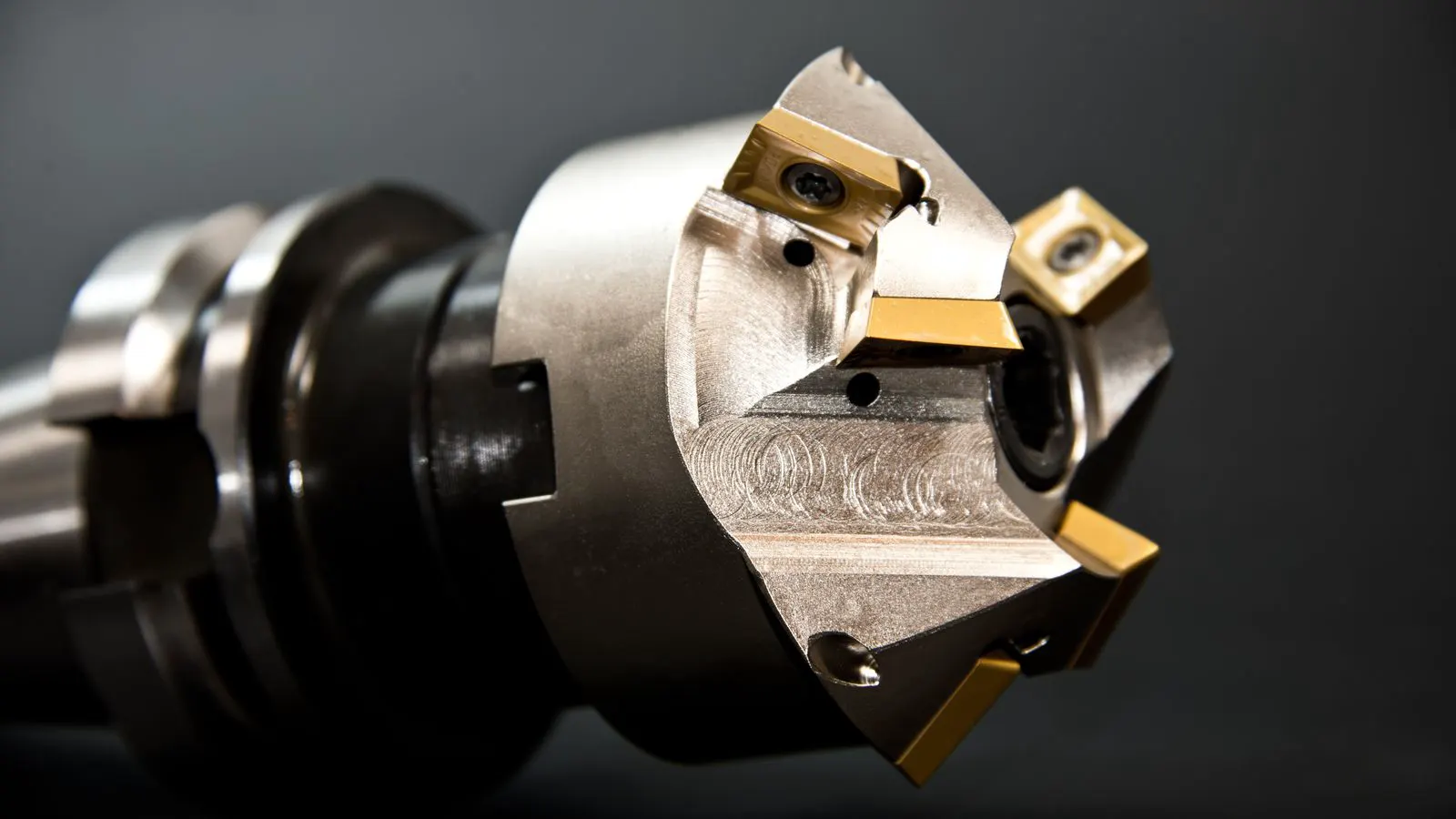
Forging post-processing cost depends on the balance between material removal and surface finish requirements. CNC machining removes excess material efficiently for complex geometry, while grinding achieves tighter tolerances and lower residual stress. The optimal choice requires evaluating part complexity, tolerance stack-up, and material loss limits.
- CNC machining is generally more economical for roughing and complex shapes, as it removes material quickly.
- Grinding is preferred for critical dimensions and surface finish, but it removes less material and requires higher setup precision.
- The decision depends on the initial forging tolerance, required final tolerance, and acceptable material loss.
- Combining both methods often provides the best cost and quality balance.
- Supplier capability in both processes impacts total cost and lead time.
What Drives the Finishing Decision
The choice between CNC machining and grinding after forging is not a simple preference. It is a calculation of material removal, tolerance achievement, and cost per part. For many structural components, the forging itself may be within a few tenths of a millimeter of the final dimension. The finishing process must close that gap without destroying the part.
Engineers often face a trade-off. Machining removes material faster but can introduce residual stresses and heat-affected zones. Grinding removes material slower but produces a cleaner surface and better dimensional control. The decision changes when the part has complex internal features or when the critical dimensions are on a tight tolerance stack.
Consider a heavy-duty gear blank. The forging die shapes the basic form, but the teeth must be cut later. If the forging leaves a generous allowance, the CNC mill handles the heavy roughing. If the die is worn and leaves the blank undersized, the mill cannot add material back. The part is scrapped. Conversely, consider a hydraulic cylinder head. The bulk of the head is machined, but the sealing face must be ground to a specific flatness. If the machined face is slightly wavy, grinding can correct it. If it is deeply concave, the grind wheel cannot reach the low points without damaging the wheel.
The material state matters. A hot-forged part that has cooled naturally may have residual stresses that relax during machining. A part that has been quenched and tempered, as is standard for high-strength steels, has a different hardness profile. The cutting fluid and tool geometry must match that hardness. Ignoring this leads to chipped carbide inserts and scrapped parts.
How CNC Machining Handles Forged Material
CNC machining is the default finishing method for most forged components. A 5-axis CNC center can remove excess material from complex geometries, including undercuts, pockets, and angled surfaces that grinding cannot reach. For a turbine blade or a structural bracket, machining is often the only way to achieve the final shape.
The cost of machining is driven by cycle time and tool wear. Forging material is dense and often work-hardened. This increases cutting forces and shortens tool life. A supplier with a stable forging process, where the part is close to final size, will see lower machining costs. If the forging is oversized to prevent die wear or to ensure material integrity, the machining cost rises significantly.
The key metric here is material removal rate. If the forging is within a reasonable tolerance, the mill can remove only a thin layer. If the forging is off by several millimeters, the mill must perform heavy roughing. This increases energy use, tool wear, and the risk of thermal distortion.
Take a large flange. If the forging leaves a 2 mm allowance on the bolt circle, the mill removes that 2 mm. The chips are thick. The tool wears quickly. The heat generated can soften the surface layer, creating a heat-affected zone that weakens the metal. If the forging leaves only a 0.5 mm allowance, the mill removes a thin shaving. The tool lasts longer. The heat stays low. The surface finish is better.
Machining also introduces stress. The act of cutting changes the grain structure. For high-strength alloys like 4140 steel, this stress can lead to cracking during subsequent heat treatment or during service. Engineers must account for this. Sometimes, a stress-relief heat treatment is required after machining and before grinding. This adds time and cost.
When Grinding Becomes the Better Option
Grinding is a precision finishing process. It uses abrasive wheels to remove material at a very slow rate. This makes it ideal for flat surfaces, cylindrical bores, and critical dimensions where surface finish and dimensional accuracy are paramount.
Grinding is often chosen for hydraulic components, bearings, and high-pressure vessels. These parts require tight tolerances and low surface roughness to prevent leakage or wear. Grinding also reduces residual stresses left by machining, which can be beneficial for fatigue life.
The main limitation of grinding is speed. A grinding wheel removes microns of material at a time. For a part with large flat surfaces, grinding can be slow. For complex 3D shapes, grinding is often impractical or impossible without special fixtures and multi-axis setups.
Imagine a piston pin. The hole is drilled and reamed during machining. But the fit must be extremely precise. Reaming can leave tool marks. Grinding the bore with a lapping stone or a small wheel creates a smoother surface. The friction between the piston and the pin drops. The wear rate drops. The part lasts longer.
Grinding is also used for thermal control. When grinding a hardened part, the friction generates heat. If the heat is too high, the surface can recast. Recast is a soft layer of metal that forms on the surface. It is bad for wear resistance and fatigue life. Operators use plenty of coolant and slow feed rates to prevent this. The process is delicate.
For internal bore grinding, the setup is critical. The wheel must be perfectly concentric with the spindle. Any deviation causes the bore to become oval or out of round. This requires careful calibration. The cost is not just labor. It is the time spent setting up and verifying the machine.
Cost and Yield Comparison
The table below summarizes the trade-offs between the two primary finishing methods.
| Option | Best for | Limitations |
|---|---|---|
| CNC Machining | Complex geometry, roughing, high material removal | Higher tool wear, potential residual stress, heat-affected zones |
| Grinding | Tight tolerances, high surface finish, critical dimensions | Slow material removal, limited to accessible surfaces, high setup cost |
| Combined Approach | Balanced cost, complex parts with critical features | Longer lead time, requires coordination between operations |
| Laser Hardening / Shot Peening | Surface treatment, fatigue life improvement | Not a dimensioning process, requires additional setup |
| Polishing | Cosmetic finish, optical surfaces | Very slow, high labor cost, limited material removal |
CNC machining is generally more economical for parts where the primary goal is shape definition. The cost per part scales with the complexity of the program and the volume of material removed. Grinding is more economical for parts where the primary goal is precision and surface quality, provided the material removal volume is low.
A common mistake is assuming that grinding is always cheaper because it uses less energy. The labor cost is often much higher. A CNC mill can run unattended for hours. A grinding operator must monitor the wheel, check the coolant, and inspect the part frequently. The machine cost is high, but the operator cost is the dominant factor.
How Yield Impacts the Final Cost
Yield is the percentage of forged parts that survive the finishing process without rejection. A poor forging process leads to high yield loss. If a forging has a crack, a large inclusion, or a severe dimensional error, it may be scrapped before finishing.
CNC machining can sometimes save a part with a minor dimensional error. A grinding operation, however, is less forgiving. If a ground part is out of tolerance, it is often difficult or impossible to correct without re-grinding the entire surface, which may be impossible due to fixture constraints.
Material loss also impacts cost. If the forging is made from a high-grade alloy, such as 4140 steel or a titanium alloy, the cost of the material is high. Removing a thick layer of material through machining reduces the effective cost of the material used in the final part. This is a hidden cost that many buyers overlook.
Supplier capability matters here. A supplier with a well-tuned forging die will produce parts with consistent dimensions. This reduces the variation in material removal required by the finishing process. A supplier with an inconsistent forging process forces the finishing stage to compensate with more aggressive machining, increasing cost and risk.
Consider a batch of 1,000 connecting rods. The forging process is stable. The machining cost is low. The yield is 98%. Now consider a new supplier with an unstable die. The forging dimensions vary widely. The machining cycle time increases because the machine must cut more material on some parts and less on others. The tool wear is uneven. Some parts are scrapped because the forging was too thin. The yield drops to 90%. The cost per good part rises significantly.
When to Choose Each Method
Pick CNC machining when the part has complex geometry, when the forging tolerance is loose, or when the primary requirement is shape definition. This is the standard choice for structural brackets, gear blanks, and automotive components.
Pick grinding when the critical dimensions are tight, when surface finish is critical for sealing or lubrication, or when residual stress control is a design requirement. This is common in hydraulic pumps, bearings, and high-pressure fittings.
The best approach for complex alloy components is often a combination. Use CNC machining to remove the bulk of the material and define the shape. Use grinding to finish the critical dimensions and surfaces. This approach minimizes the amount of material ground and keeps the total cost down.
The decision should be made during the design phase. The drawing should specify which dimensions require grinding and which can be machined. The supplier should be able to model the material removal and provide a cost estimate based on the expected forging tolerance.
For example, a turbine casing may have a complex outer shape that requires 5-axis machining. But the bore where the shaft enters must be ground to a high flatness. The design team must specify both. If the drawing only says “tolerance +/- 0.05 mm”, the supplier may assume machining is sufficient. This leads to a failure in the field. The drawing must be explicit.
Impact on Lead Time and Supplier Selection
Finishing processes can be a bottleneck. CNC machining is parallelizable. Multiple parts can be machined simultaneously on different machines. Grinding is often serial due to the need for precise alignment and the risk of thermal distortion.
A supplier that integrates forging and finishing in-house can coordinate the processes more effectively. They can adjust the forging die based on the machining results. This reduces cycle time and improves yield.
When evaluating a supplier, ask about their post-forging finishing capability. Do they have in-house grinding? Do they use a specialized subcontractor? What is the typical material removal rate they expect? A supplier with a clear understanding of their finishing limits will provide more accurate cost estimates and lead times.
The total cost of ownership includes the cost of rework. If a part fails inspection after grinding, the rework cost is high. A supplier with a strong quality control process at each stage will reduce rework and improve overall yield.
Lead time is also affected by the sequence. If machining and grinding are done on different shifts, the part sits in storage. If they are done back-to-back, the part moves quickly. This matters for just-in-time manufacturing. A supplier with a flexible shop floor can handle volume spikes better.
Final Considerations
The choice between CNC machining and grinding is a trade-off between speed, precision, and cost. There is no single best method for all parts. The optimal process is the one that achieves the required dimensions and surface quality with the lowest total cost and material loss.
Engineers should work with their supplier to define the finishing requirements. The forging tolerance, the critical dimensions, and the surface finish requirements should be clearly defined. This information allows the supplier to propose the most efficient finishing process.
The goal is to minimize the amount of material removed during finishing. This is achieved through a well-designed forging process and a well-defined finishing process. The result is a lower cost, higher yield, and a better final part.
Frequently asked questions
Can grinding fix a forging that is out of tolerance?
Grinding can correct small dimensional errors, typically within a few thousandths of an inch. If the error is large, the material loss may be too great, or the surface may be inaccessible for grinding.
Which process is cheaper for a simple flat part?
For a simple flat part, grinding is often cheaper if the part is already close to final size. For a part with significant material to remove, CNC machining is usually cheaper.
How does material type affect the choice?
Harder materials like tool steel or titanium are more expensive to machine and grind. The tool wear is faster, and the cost per part is higher. The choice of process may lean toward the one that removes less material.
Can I use both processes on the same part?
Yes, this is common. CNC machining is used for roughing and shape definition, while grinding is used for finishing critical dimensions and surfaces. This is often the most cost-effective approach for complex parts.
What is the biggest mistake in planning post-processing?
The biggest mistake is not defining the critical dimensions and surface finish requirements early. Without this information, the supplier cannot optimize the finishing process, leading to higher costs and lower yield.


